The Timeless Art of Bohemian Macrame: A Guide to Knots, Creativity, and Free-Spirited Decor.
Bohemian macrame has captured the hearts of crafters and interior designers alike, blending intricate knotting techniques with a carefree, artistic vibe that represents freedom, creativity, and individuality. Rooted in ancient textile traditions yet constantly reinvented, macrame has evolved into a signature element of bohemian and modern interiors. Its tactile textures and handmade charm add warmth and personality to spaces that feel otherwise minimal or impersonal.
From statement wall hangings and plant holders to room dividers, accessories, and even furniture accents, bohemian-macrame offers endless opportunities for personal expression. Each knot tells a story, making every piece unique and deeply personal. Beyond aesthetics, the slow, repetitive knotting process promotes mindfulness and relaxation—turning macrame into both a creative outlet and a calming ritual.
In this comprehensive guide, we’ll dive deep into the world of bohemian macrame, exploring its rich history, essential materials, foundational knotting techniques, and modern applications. Whether you’re a beginner curious about your first project or an experienced crafter looking to refine your style, this guide will help you confidently incorporate macrame into your home and creative lifestyle.
1. What Is Macrame and Why Bohemian Style Stands Out.

Macrame is the art of knotting cords or strings into decorative patterns without using needles or hooks. The bohemian twist adds flowing fringes, natural materials, and eclectic designs that evoke wanderlust and relaxation.
2. A Brief History of Macrame.

Originating from 13th-century Arabic weavers, macrame spread through sailors in the Victorian era and exploded in popularity during the 1970s hippie movement—laying the foundation for today’s macrame revival.
3. Essential Materials for Starting Bohemian Macrame.

You’ll need cotton cord (3-5mm thickness for beginners), wooden dowels or rings, beads, feathers, and natural dyes. Opt for recycled cotton to keep your projects eco-friendly and truly bohemian.
4. Basic Knots Every Beginner Should Master.

St most bohemian macrame patterns and allow you to create complex textures quickly.
5. Choosing the Right Cord for Macrame Projects.

For that signature soft, fringed look in this macrame, single-twist cotton or jute works best—it frays beautifully and holds knots securely while giving an organic feel.
6. Popular Bohemian-Macrame Patterns to Try First.

Beginner-friendly patterns include simple wall hangings with diamond shapes, feather-inspired fringes, or geometric repeats that capture the free-spirited essence of boho decor.
7. Creating Stunning Macrame Wall Hangings.

Wall hangings are the hallmark of bohemian interiors. Layer different knot densities, add driftwood branches, and incorporate asymmetrical designs for maximum visual impact.
8. Macrame Plant Hangers: Bringing Nature Indoors.

These iconic pieces elevate your houseplants while adding height and texture. Experiment with multiple tiers and colorful cords to match your macrame aesthetic.
9. Bohemian-Macrame Jewelry and Accessories.

From earrings to belts, smaller projects let you wear your craft. Use finer cords (1-2mm) and incorporate gemstones or shells for a festival-ready boho look.
10. Incorporating Macrame into Home Decor.

Blend macrame curtains, table runners, or chair backs with rattan furniture, lush plants, and layered textiles to create a cozy, nomadic-inspired space.
11. Advanced Techniques for Elevating Your Bohemian-Macrame

Once comfortable with basics, try double half hitches for curves, gathering knots for volume, or combining macrame with weaving for hybrid bohemian pieces.
12. Caring for and Maintaining Your Macrame Creations.

Dust regularly, spot-clean with mild soap, and reshape fringes while damp. Proper care ensures your bohemian macrame pieces remain beautiful for years.
13. Choosing the Perfect Colors for Bohemian-Macramé.
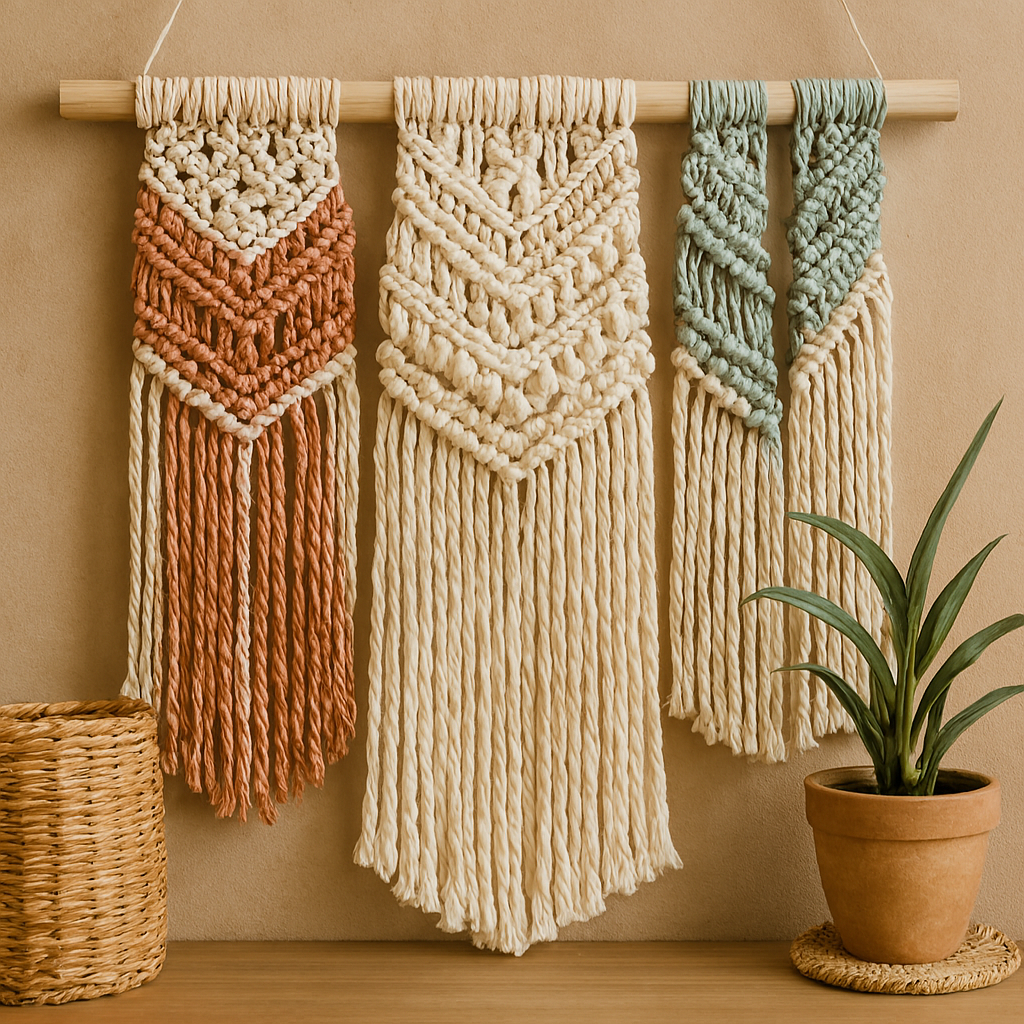
Color plays an important role in Bohemian-Macramé design. Traditional boho palettes rely on earthy tones such as beige, cream, terracotta, and warm brown. These colors reflect nature and create a calm atmosphere. However, modern Bohemian-Macramé projects sometimes introduce muted pastels or soft sunset shades to add personality while maintaining the relaxed boho aesthetic
14. Mixing Bohemian-Macramé with Natural Materials.

One reason Bohemian Macramé looks so organic is its harmony with natural materials. Driftwood, bamboo sticks, wooden beads, rattan frames, and feathers complement the knotted cords beautifully. Combining these materials enhances the handmade aesthetic and makes Bohemian-Macramé pieces feel authentic and grounded in nature
15. Layering Bohemian-Macramé for Dramatic Walls.

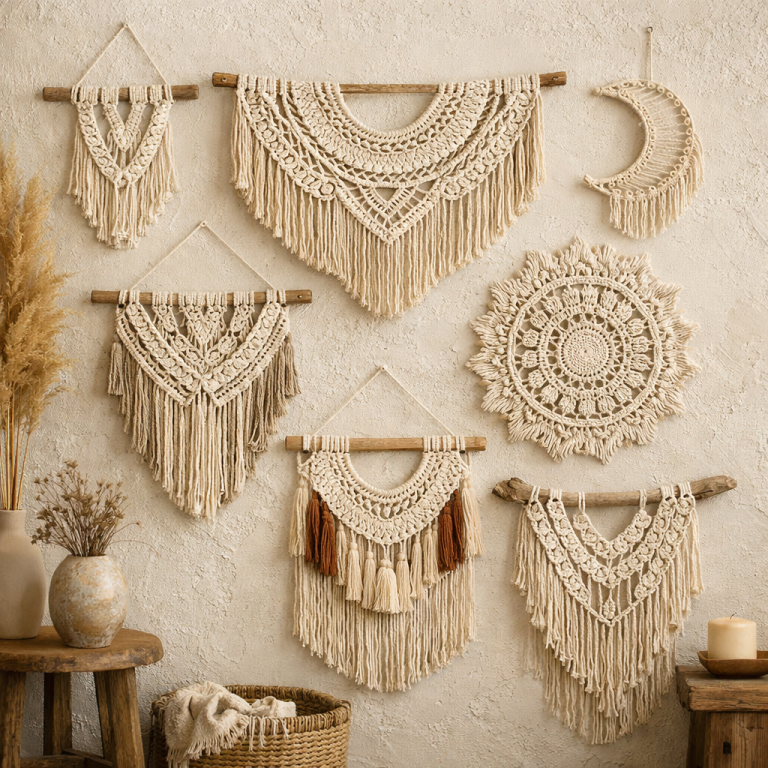
Layering multiple Bohemian wall hanging pieces on a single wall can create an impressive visual statement. Designers often combine different sizes, patterns, and knot densities to build depth. This layered styling technique allows Bohemian Macramé to transform plain walls into artistic focal points filled with texture and movement
16. DIY Bohemian-Macramé Projects for Beginners.

Starting a Bohemian Macramé project at home can be incredibly rewarding. Beginners often begin with small wall hangings, simple plant holders, or keychains. These easy projects introduce fundamental knot techniques while helping new crafters understand the rhythm of Bohemian wall hanging knotting
17. Bohemian Macramé as a Statement Interior Feature.

Large Bohemian Macramé installations can serve as statement décor pieces in living rooms, bedrooms, or entryways. Oversized wall hangings or macrame room dividers create instant visual drama while maintaining the relaxed boho vibe. Statement Bohemian-Macramé pieces often become the centerpiece of an entire interior design theme
18. Sustainable and Eco-Friendly Bohemian-Macramé.
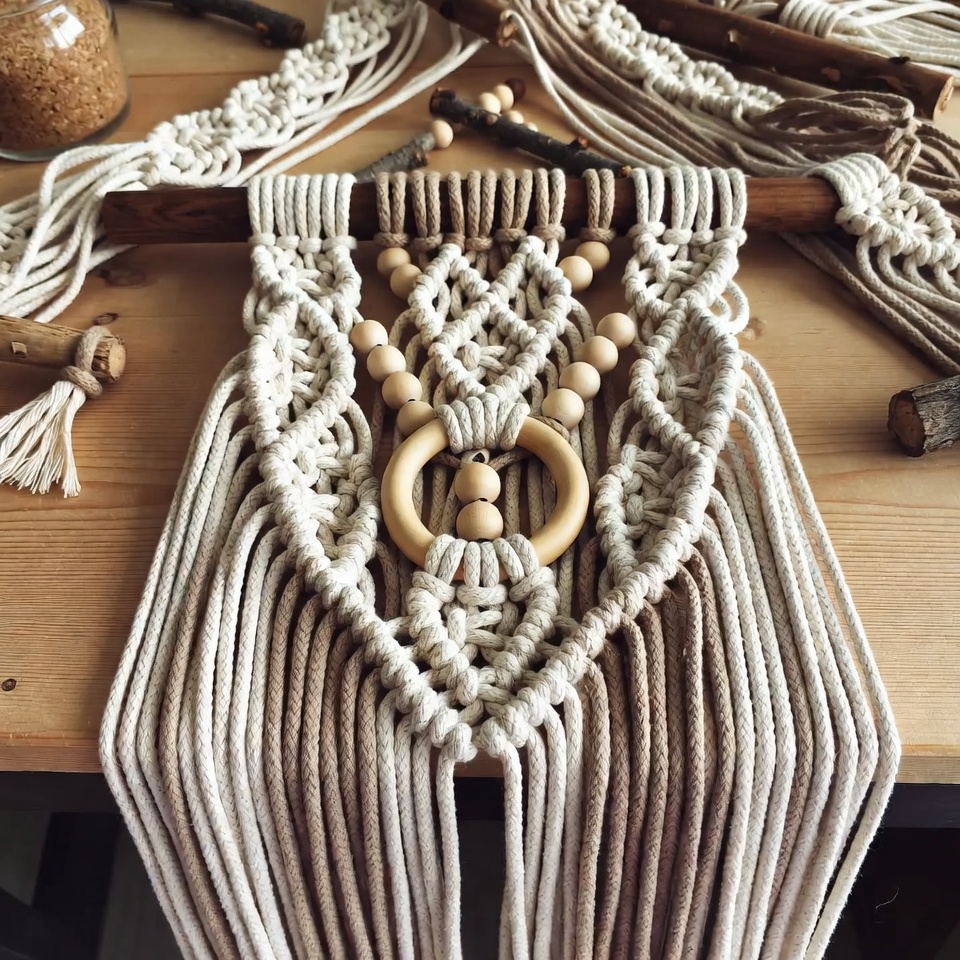
Many artisans prefer eco-conscious materials when creating Bohemian-Macramé. Recycled cotton cords, natural dyes, bamboo rods, and reclaimed wood make macrame projects environmentally friendly. Sustainable Bohemian-Macramé reflects the boho philosophy of respecting nature while celebrating handmade craftsmanship
19. Styling Bohemian-Macramé in Modern Homes.

Even minimalist homes can benefit from the soft texture of Bohemian-Macramé. A neutral macrame wall hanging placed in a modern interior creates contrast without overpowering the design. Designers often use Bohemian-Macramé to soften clean architectural lines and add warmth to contemporary spaces
20. The Growing Popularity of Bohemian-Macramé in Interior Design.

In recent years, Bohemian-Macramé has experienced a global revival. Social media, handmade marketplaces, and DIY culture have brought this ancient craft back into the spotlight. Designers and homeowners now use Bohemian-Macramé as a stylish way to add texture, creativity, and personal expression to interiors
Final Thoughts:
Bohemian macrame is far more than a decorative craft—it’s a mindful, meditative practice that connects you to centuries of artisan tradition while encouraging complete creative freedom. The rhythmic motion of knotting slows the mind, making the process just as rewarding as the finished piece. In a fast-paced, digital world, macrame offers a chance to create something tangible, intentional, and deeply personal.
Whether you’re crafting a simple plant hanger, an intricate wall tapestry, or experimenting with modern macrame furniture accents, each project reflects your individuality and artistic voice. Bohemian wall hanging fits effortlessly into contemporary homes, blending natural textures with both minimal and eclectic interiors while adding warmth, depth, and soul.
Don’t be afraid to experiment with materials, scale, or patterns. Mistakes often lead to the most interesting designs, and growth comes through hands-on practice. Dive in with curiosity, knot with intention, and let bohemian-macrame bring texture, calm, and character into your space—and your creative journey. Happy knotting!