Powerful Digital Habits & Screen Time Management in 2026
Introduction: The Need for Digital Control
In 2026, technology has become an inseparable part of everyday life. From the moment we wake up to the time we go to sleep, screens dominate our routines. Smartphones, laptops, and smart devices help us stay connected and productive, but they also bring constant distractions. Without proper control, excessive screen time can lead to reduced focus, poor sleep, and increased stress levels. This is why developing strong digital habits and effective screen time management is essential for maintaining a balanced and productive lifestyle.
1. What Are Digital Habits?
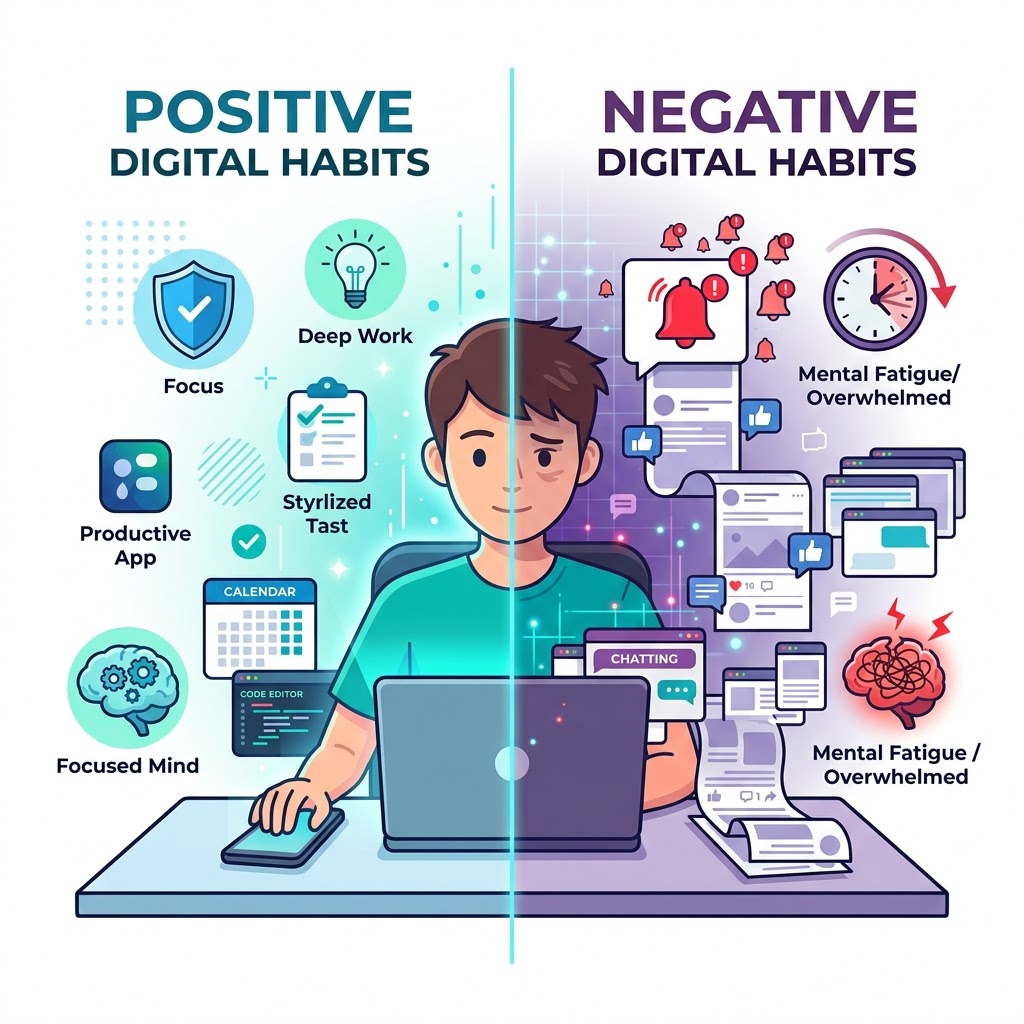
Digital habits are the repeated behaviors we develop while interacting with technology. These include checking notifications frequently, scrolling social media without purpose, or switching between apps while working. Over time, these habits become automatic and shape how we use our devices. Positive digital habits improve efficiency and focus, while negative habits lead to time waste and mental fatigue. Understanding your current habits is the first step toward improving them.
2. The Real Impact of Screen Time
Excessive screen time affects both physical and mental health in several ways. Physically, it can cause eye strain, headaches, and poor posture due to long hours of sitting. Mentally, it reduces attention span and increases stress levels. Sleep quality is also affected because blue light from screens interferes with natural sleep cycles. Managing screen time is not about eliminating technology but about using it in a balanced and mindful way.
3. Signs You Need Screen Time Management
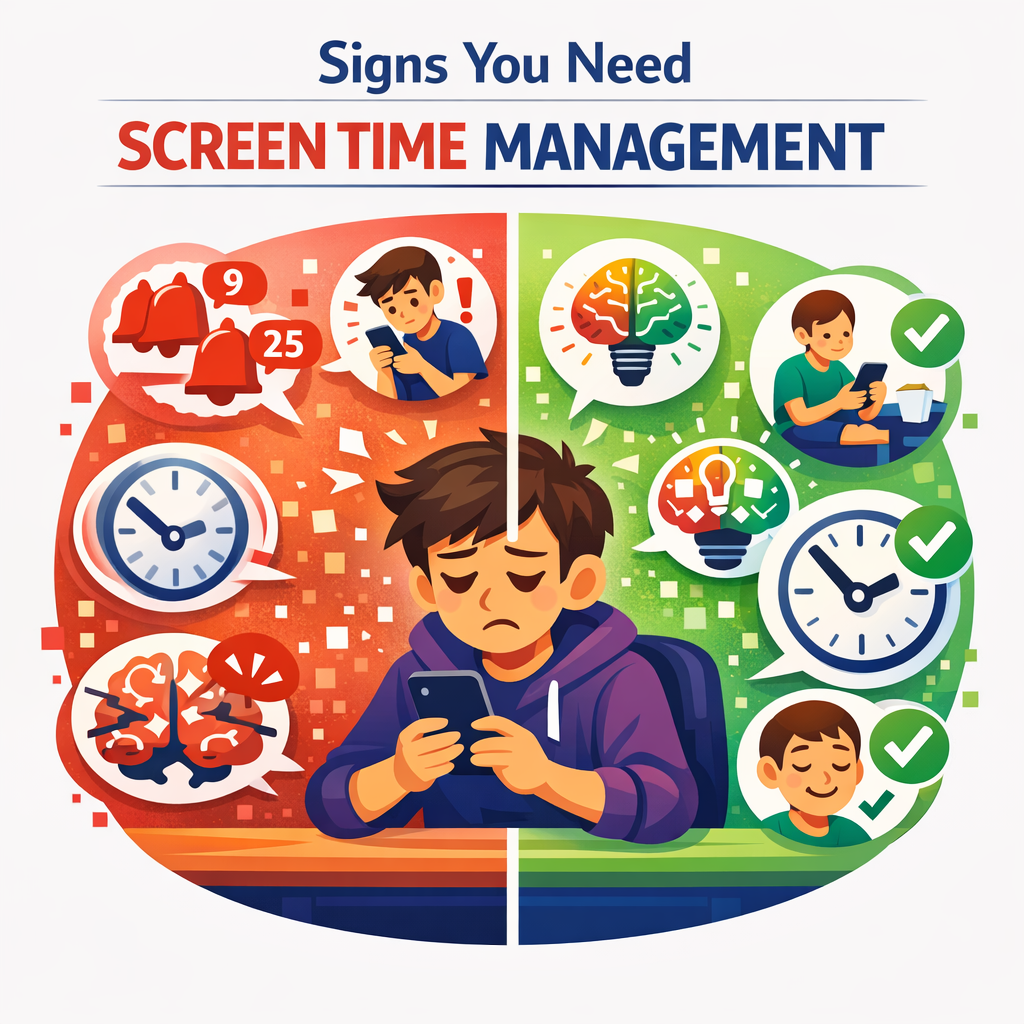
There are several clear signs that indicate your screen usage is becoming unhealthy. If you constantly check your phone without any real purpose, struggle to focus on tasks, or feel anxious when you are away from your device, it’s time to take control. Another common sign is losing track of time while browsing apps or feeling mentally drained after long screen sessions. Recognizing these warning signs allows you to take action before the habit becomes a serious issue.
4. Build a Healthy Digital Routine
A structured daily routine is one of the most effective ways to improve digital habits. Start by setting specific times for work, breaks, and personal activities. Avoid using your phone during focused work sessions, and schedule short breaks to refresh your mind. Including offline activities such as reading, exercise, or spending time with family helps create balance. A well-planned routine ensures that technology supports your life instead of controlling it.
5. Morning Without Screens

Starting your day without immediately checking your phone can significantly improve your mindset. When you avoid screens in the morning, your brain remains calm and focused instead of being overloaded with information. Use this time for planning your day, journaling, or light exercise. Even 30 minutes of screen-free time in the morning can increase productivity and reduce stress throughout the dayand sets a positive tone
6. Social Media & Notification Control
Notifications are designed to grab your attention, often pulling you away from important tasks. Constant alerts break your focus and reduce productivity. To manage this, turn off non-essential notifications and keep only the most important ones active. Limiting social media usage to specific time slots can also prevent endless scrolling. These small adjustments can make a big difference in improving your digital discipline
7. The Power of Digital Detox

A digital detox allows your mind to reset and recover from constant screen exposure. Taking a break from devices—even for a few hours—can improve mental clarity and reduce stress. Many people choose a full day each week to disconnect from technology and focus on real-life experiences. Activities like walking, reading, or spending time with loved ones can make detoxing both enjoyable and beneficial.
8. Time Blocking for Better Focus
Time blocking is a simple yet powerful productivity technique. It involves assigning specific time slots for different tasks, including checking emails and using social media. By following a structured schedule, you avoid random phone usage and stay focused on important work. This method helps reduce distractions and ensures that your time is used efficiently
9. Avoid Multitasking
Although multitasking may seem efficient, it actually reduces productivity. Constantly switching between tasks or apps forces your brain to refocus repeatedly, which wastes time and energy. Instead, concentrate on one task at a time. This approach improves the quality of your work and helps you complete tasks more quickly and effectively
10. Create No-Phone Zones

Setting boundaries within your home can significantly improve your digital habits. Designate certain areas, such as the dining table or bedroom, as no-phone zones. This encourages meaningful conversations, better sleep, and a healthier lifestyle. Small environmental changes can lead to long-term behavioral improvements
11. Screen Time for Kids & Teens
Young people are especially vulnerable to excessive screen use. Setting clear boundaries and encouraging offline activities are essential for their development. Parents should monitor usage, promote educational content, and create balanced routines. Teaching healthy digital habits early helps children develop better discipline as they grow
12. Tools for Screen Time Management
Modern devices offer built-in tools to track and limit screen usage. These tools provide insights into how much time you spend on different apps, helping you identify areas for improvement. By regularly reviewing your usage patterns, you can make informed decisions and build healthier habits
13. Long-Term Benefits of Healthy Digital Habits
Improving your digital habits leads to long-term benefits such as better focus, improved sleep, stronger relationships, and increased productivity. Over time, these positive changes enhance your overall quality of life and help you achieve your personal and professional goals
Conclusion: Take Back Control
Technology should be a tool that enhances your life, not something that controls it. By developing strong digital habits and managing your screen time effectively, you can create a more balanced, productive, and fulfilling lifestyle in 2026 and beyond