10 Stunning 3 Floor House Elevation Ideas for Modern Homes
Designing a 3 floor house elevation is not as simple as choosing a few modern ideas. Most homeowners struggle with balancing proportions, selecting the right materials, and making sure the house doesn’t look bulky or unattractive.
If not planned properly, a three-story home can easily look crowded, outdated, or poorly structured.
When to Choose Each 3 Floor Elevation Style
- Minimalist → best for small urban plots
- Box style → best for modern city homes
- Balcony design → best for ventilation + lifestyle
In this guide, you’ll not only find modern 3 floor elevation ideas but also learn how to choose the right design, avoid common mistakes, and make your home look clean, modern, and premium.
1. Minimalist 3 Floor House Elevation

Minimalist architecture works beautifully for taller residential buildings. Clean lines, smooth surfaces, and neutral color palettes help create a sophisticated exterior. A minimalist three floor house elevation often combines white or light gray plaster with subtle wooden or stone accents to keep the design modern and uncluttered.
2. Box-Style Three-Story Elevation

Box-style architecture is widely used in contemporary homes. Layered rectangular volumes add depth and dimension to the façade. In a 3 floor house elevation, stacked box structures can highlight balconies or window areas while giving the home a strong modern identity.
3. Balcony-Focused Elevation Design

Balconies play an important role in the appearance of multi-story homes. Glass railings, metal frames, or wooden accents can turn balconies into elegant architectural features. In many designs, the balconies become the most eye-catching element of the three floor house elevation.
4. Vertical Panel Architecture

Vertical panels are often used to visually connect all three floors of the building. Wooden slats, metal strips, or textured wall panels create a sense of height and elegance. These vertical elements help unify the design of a 3 floor house elevation while adding a modern architectural rhythm.
5. Mixed Material Exterior

Modern architecture frequently combines multiple materials to create visual interest. Brick, wood, plaster, stone, and glass can be layered carefully to form a dynamic façade. A balanced mix of materials gives a three floor house elevation depth and architectural richness.
6. Large Window Contemporary Style

Large windows are a defining feature of modern homes. Floor-to-ceiling glass panels allow natural light to enter the interior while enhancing the exterior appearance. In a 3 floor house elevation, large windows help reduce the visual heaviness of a tall structure and create an open, airy look.
This style works best for west-facing homes where controlling heat and sunlight is important.
7. Neutral Color Elevation Design

Neutral color palettes remain timeless in residential architecture. Shades like off-white, beige, soft gray, and charcoal create a sophisticated exterior appearance. A carefully chosen palette ensures the 3 floor house elevation looks elegant without appearing overly decorative.
8. Greenery Integrated Facade
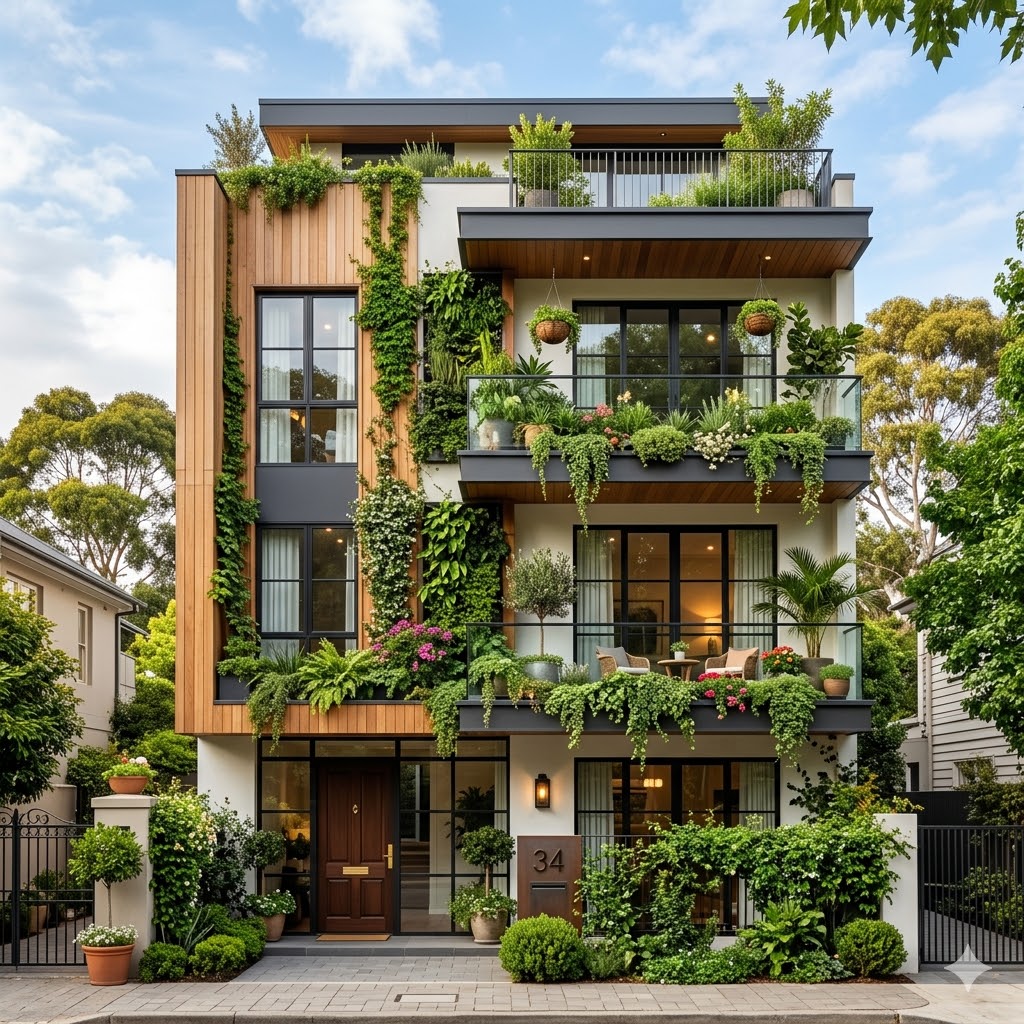
Incorporating plants and greenery into the exterior design adds freshness and natural beauty. Balcony planters, vertical gardens, or small rooftop plants soften the structure of the building. This approach makes a 3 floor house elevation feel welcoming and visually lively.
9. Stylish Entrance for Tall Homes

The entrance area should be designed carefully because it anchors the entire façade. A modern door, decorative canopy, and subtle lighting can create a strong first impression. A well-designed entrance strengthens the visual balance of a 3 floor house elevation.
This style works best for west-facing homes where controlling heat and sunlight is important.
10. Architectural Lighting for Night Appeal

Exterior lighting dramatically enhances the beauty of multi-story homes after sunset. Wall lights, LED strips, and balcony lighting highlight architectural features and textures. With thoughtful illumination, a 3 floor house elevation can look elegant and striking during the evening.
How to Choose the Right 3 Floor House Elevation Design
Choosing the right elevation design for a 3 floor house is not just about looks. Many homeowners struggle with selecting a design that balances style, proportion, and practicality.
Before finalizing a design, consider these key factors:
- Plot size and width: Narrow plots need vertical design elements, while wider plots allow horizontal layouts
- Surrounding environment: Match your design with nearby homes for a balanced look
- Budget limitations: Avoid over-designing if you are working with a limited budget
- Functionality: Ensure proper ventilation, lighting, and balcony placement
A well-planned elevation not only looks modern but also improves comfort and usability.
Key Challenges in 3 Floor House Elevation Design
Designing a three-story house comes with specific challenges that many people overlook.
Bulky Appearance
Without proper planning, a 3 floor house can look heavy and unattractive.
Poor Proportions
If floors are not visually balanced, the structure can feel uneven.
Overuse of Materials
Using too many textures or colors can make the design look messy.
Lack of Lighting
A good elevation is incomplete without proper exterior lighting.
Understanding these challenges helps you avoid common design mistakes.
Best Color Combinations for 3 Floor House Elevation
Color selection plays a major role in how your house looks from the outside.
Popular modern combinations include:
- White and grey for a clean, minimal look
- Beige and brown for a warm and elegant feel
- Black and white for a bold, modern appearance
- Cream with wooden accents for a premium finish
For three-story houses, it’s best to stick to 2–3 colors maximum to maintain visual balance.
Best Materials for 3 Floor House Front Elevation
The materials you choose can completely change the final appearance of your home.
Common options include:
- Stone cladding for a luxury and durable finish
- Wood panels for a modern and warm look
- Exterior paint for a budget-friendly upgrade
- Tiles or textured panels for contemporary designs
Instead of using one material everywhere, combine materials strategically to create a modern and balanced look.
Cost of 3 Floor House Elevation in the USA
The cost of designing a 3 floor house elevation varies based on materials, labor, and design complexity.
Typical cost range:
- Basic design: $3,000 – $8,000
- Mid-range design: $8,000 – $20,000
- High-end design: $20,000 and above
Costs may increase depending on:
- location
- contractor rates
- material quality
Planning your budget early helps avoid unnecessary expenses.
Common Mistakes to Avoid in 3 Floor Elevation Design
Avoiding mistakes is just as important as choosing the right design.
- Using too many colors
- Mixing too many materials
- Ignoring lighting design
- Copying designs that don’t suit your plot
- Not planning proportions properly
A simple, well-balanced design always performs better than an overly complex one.
How to Make a 3 Floor House Look Modern
Even a simple structure can look modern with the right approach.
- Use clean and straight design lines
- Add one accent wall (stone or wood)
- Keep the color palette minimal
- Install modern exterior lighting
- Focus on symmetry and alignment
Modern design is about simplicity and clarity, not complexity.The Ultimate Guide to Front-Elevation-Design for Modern and Timeless HomesThe Ultimate Guide to Front-Elevation-Design for Modern and Timeless Homes
What is the best design for a 3 floor house elevation?
A modern design with clean lines, limited colors, and balanced proportions works best.
How do you make a 3 story house look modern?
Use simple geometry, neutral colors, and highlight one focal area.
Which color is best for 3 floor elevation?
Neutral shades like white, grey, and beige with darker accents are ideal.
How much does a 3 floor elevation cost in the USA?
It typically ranges from $3,000 to $20,000 depending on complexity.
What materials are best for multi-story elevation?
Stone, wood panels, and textured finishes are commonly used.