Second Part – Urban Women’s Clothing from the Subcontinent That is Also Popular in Europe and America.
Introduction: The Silk Thread Between Cultures.
Fashion, like language, travels. It crosses oceans, settles into cities, and quietly reshapes wardrobes far from where it began. Over the past decade, urban women’s clothing from the subcontinent has evolved beyond cultural boundaries, finding devoted audiences across Europe and America.
What was once reserved for festive gatherings and traditional ceremonies is now reinterpreted for metropolitan life. Designers are blending heritage craftsmanship with contemporary tailoring, creating garments that feel rooted yet refreshingly global. From breathable linens to embroidered fusion silhouettes, these pieces tell stories of migration, identity, and creative exchange
1. The Linen Kurta Revival.
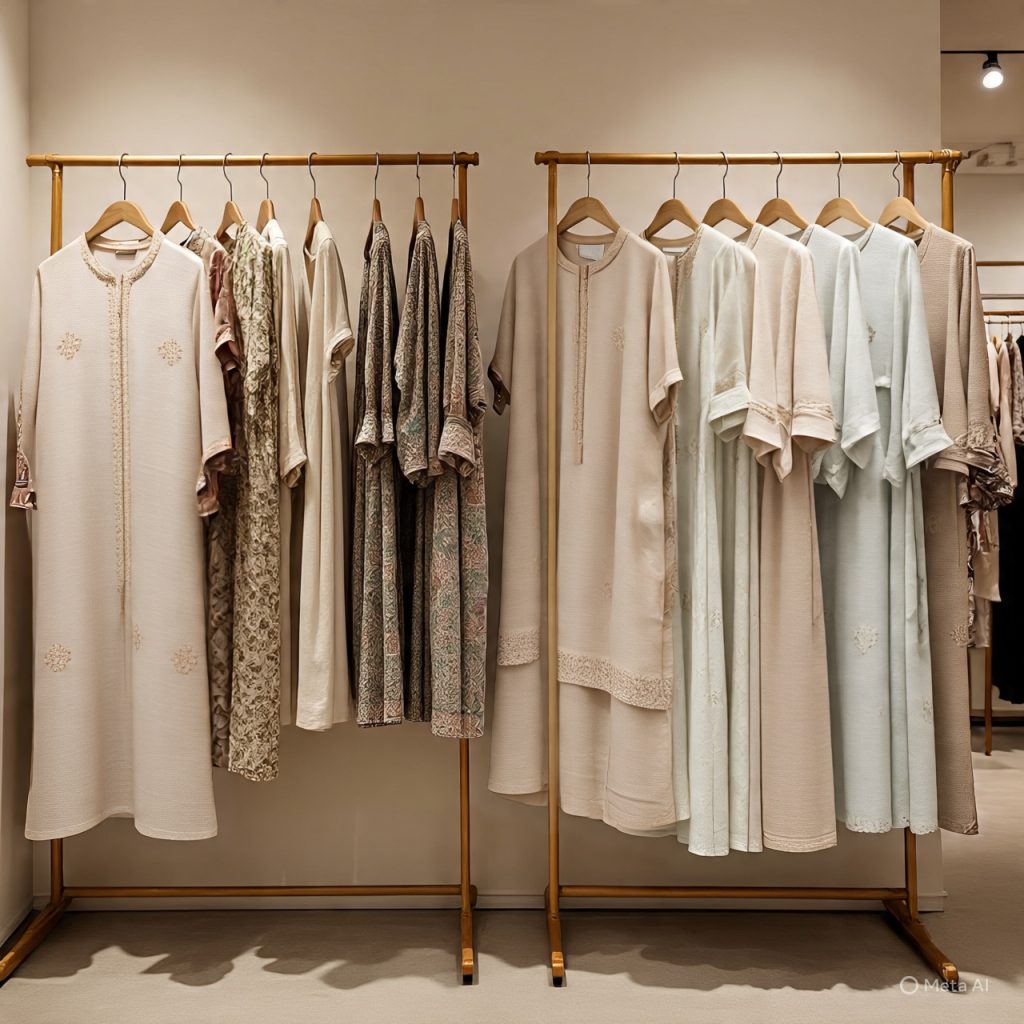
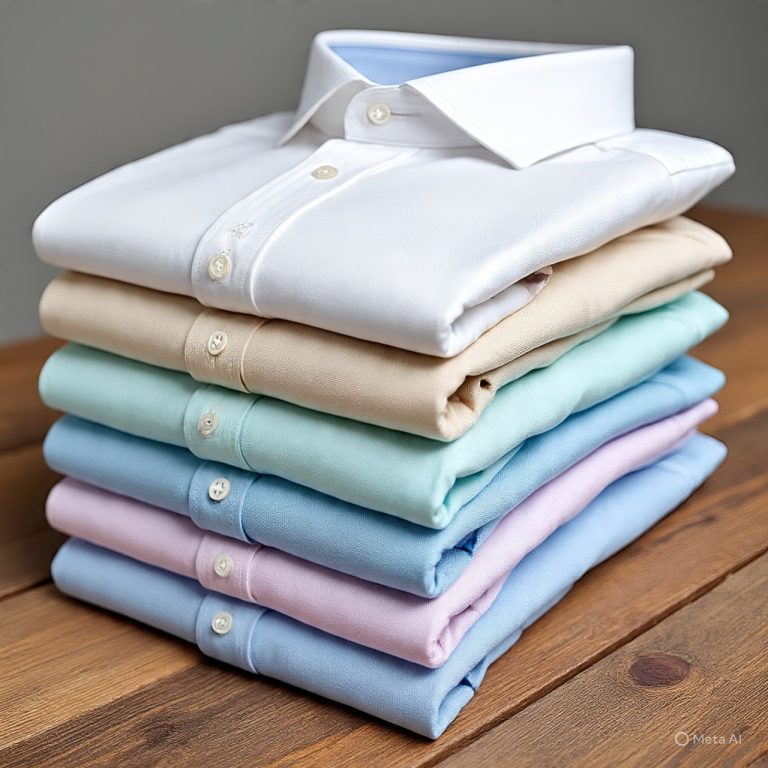
Fashion staple: Breezy linen kurtas with minimalist embroidery have become city essentials. Paired with jeans or cigarette pants, they exude a quiet elegance that fits New York offices as comfortably as Lahore cafés, blending professionalism with effortless cultural charm..
2. Silk Tunics with Metallic Accents.
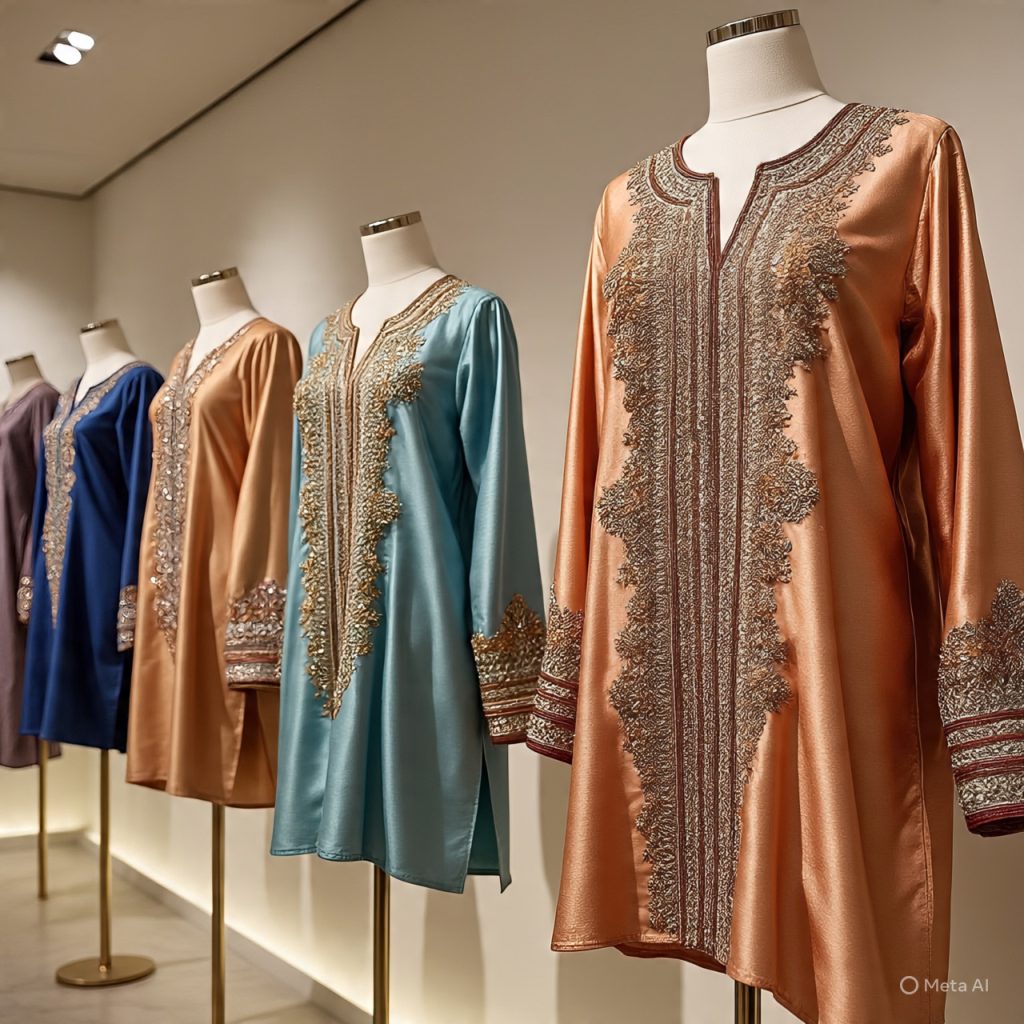
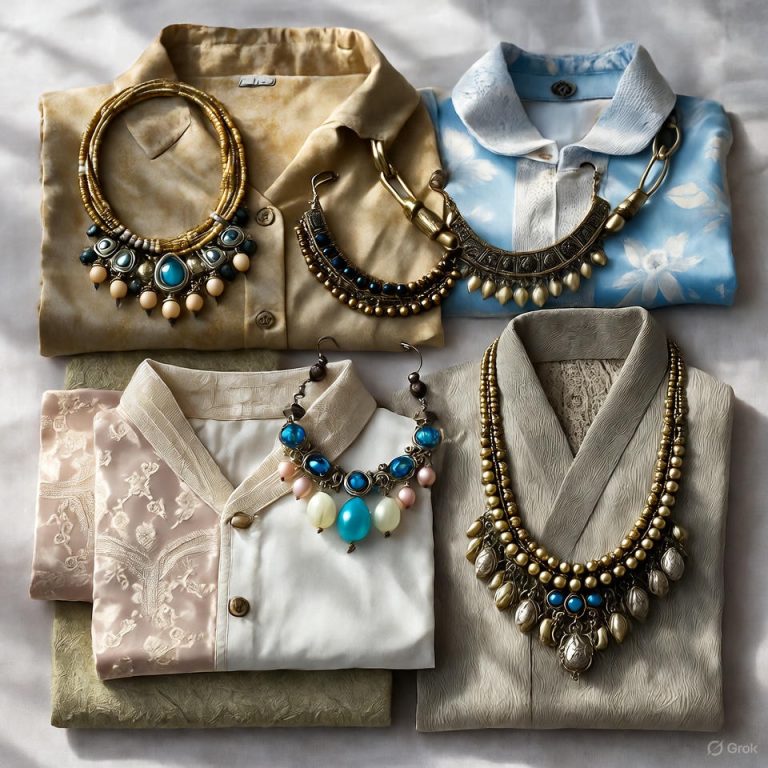
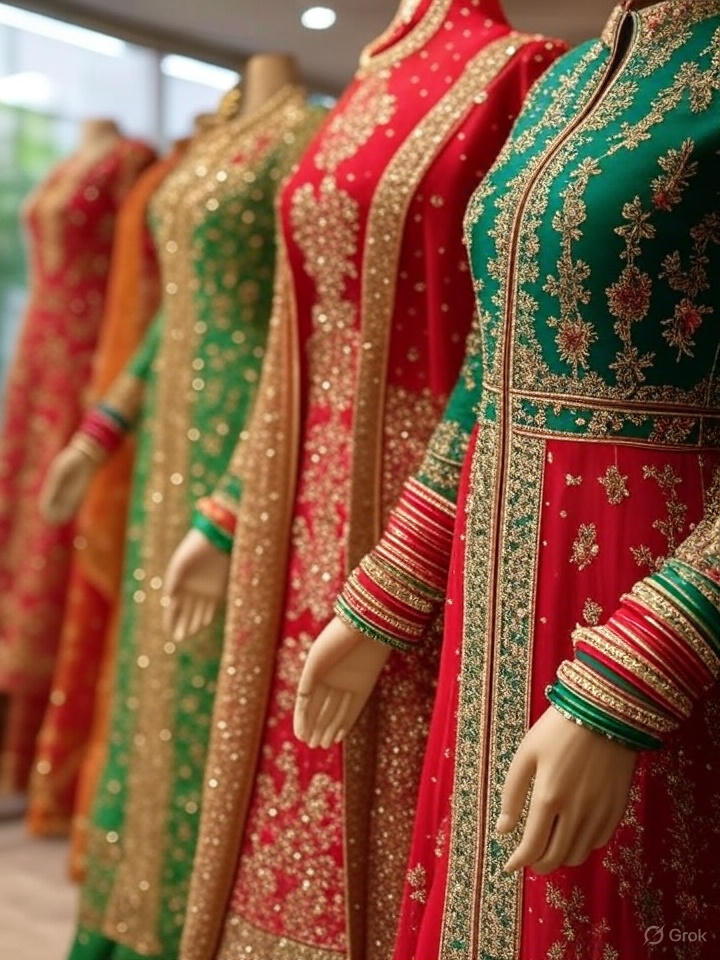
In modern fashion, rich silk tunics with gold-thread highlights shimmer softly under urban lighting—ideal for gallery evenings or chic brunches, offering understated luxury without overpowering contemporary silhouettes.
3. The Fusion Jumpsuit: When Heritage Meets the City Skyline.
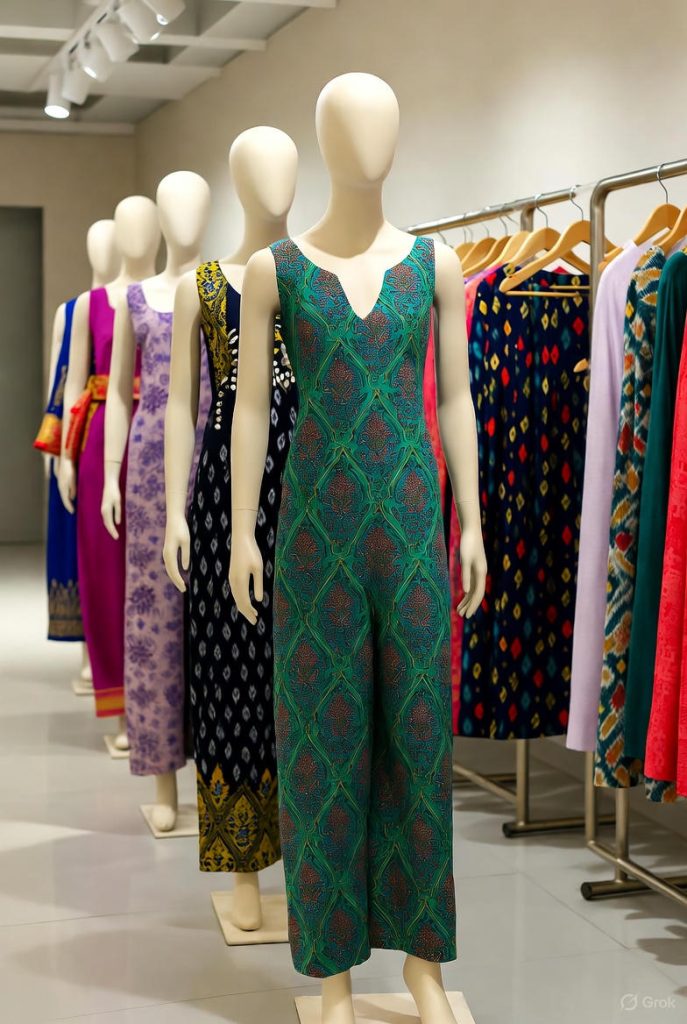
Fashion forward: Modern jumpsuits reinvented with Ajrak, Ikat, or mirrorwork detailing—global silhouettes infused with subcontinental soul, perfect for women seeking statement pieces that carry cultural depth and timeless appeal.
4. The Urban Saree: Draped in Modern Ease
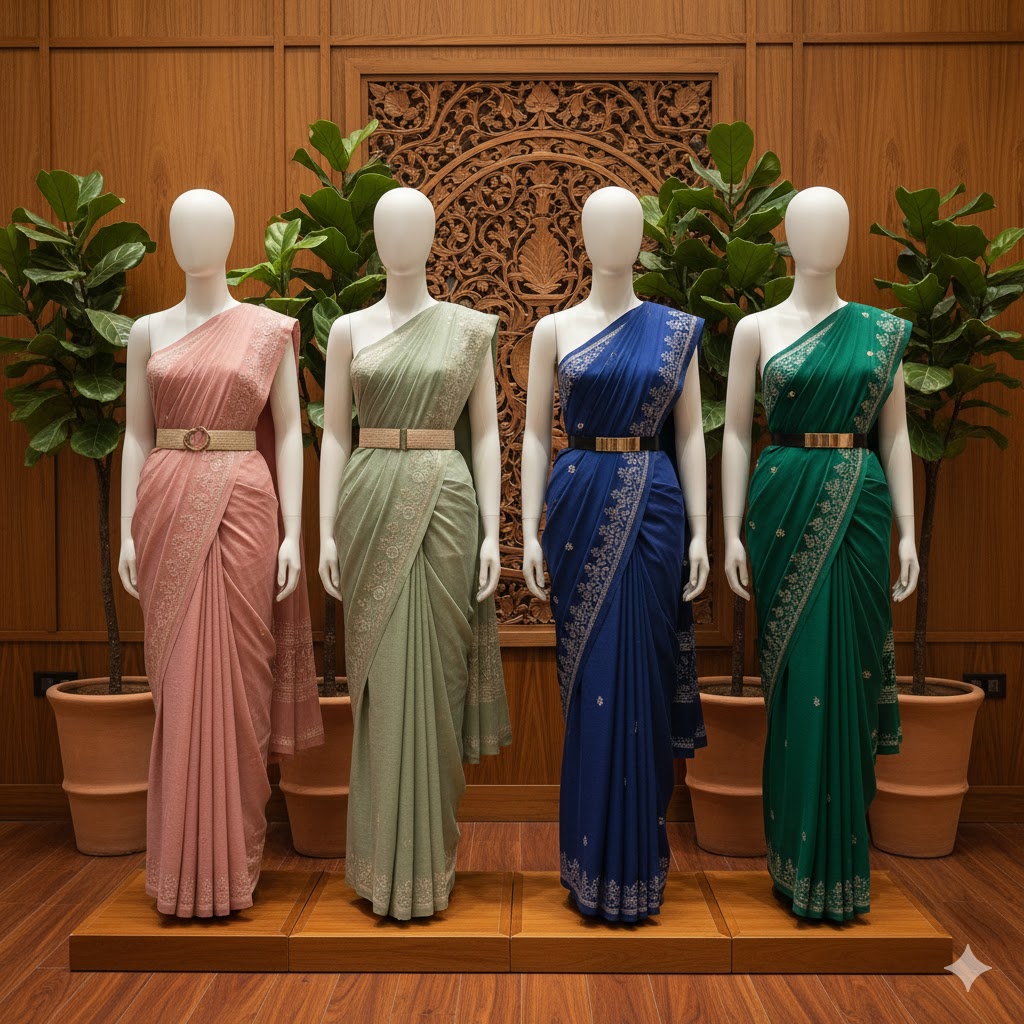
Pre-stitched sarees, belted drapes, and jacket pairings bring freedom and flair in today’s fashion—ideal for the cosmopolitan woman navigating fast-paced city lifestyles. Together, these reinterpretations show how tradition adapts seamlessly to evolving urban wardrobes۔
5. Handloom Chic.
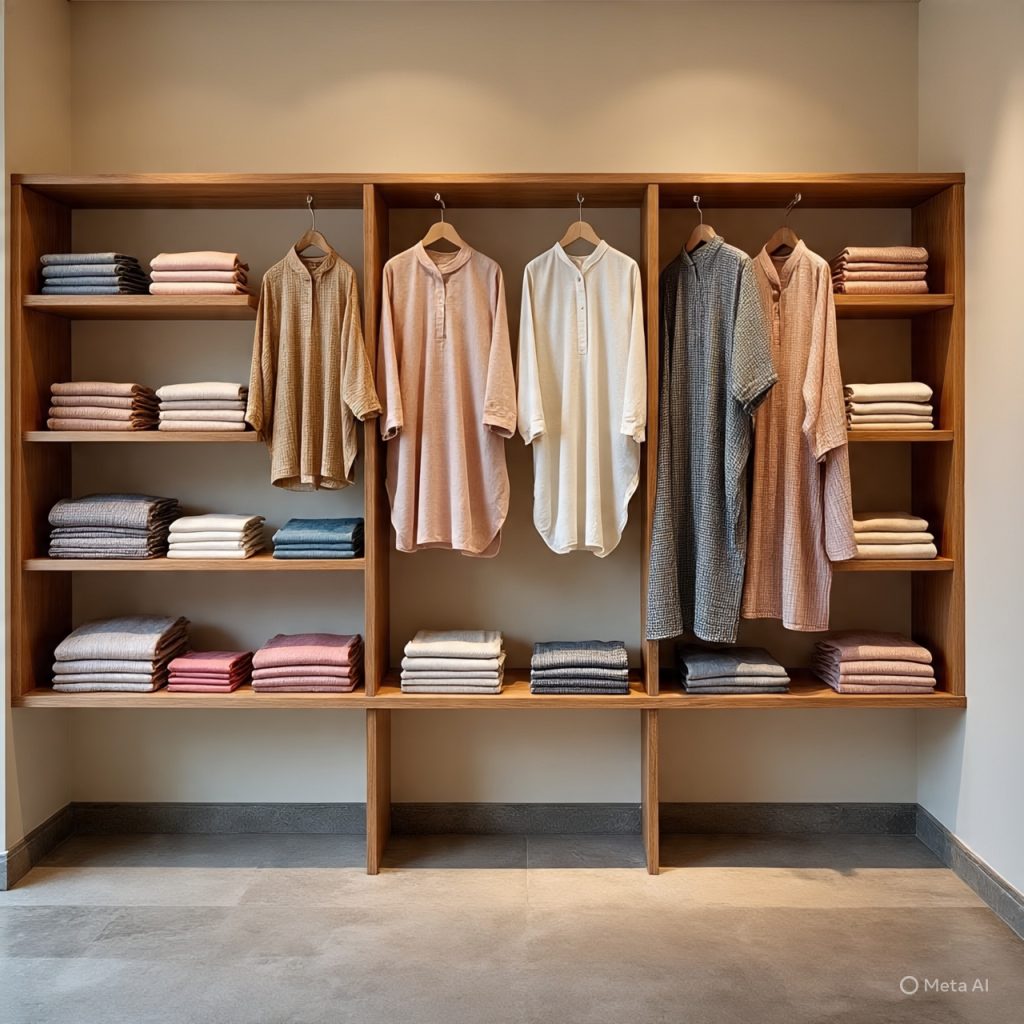
Cotton and khadi handlooms with crisp tailoring—sustainable, breathable, and proudly traditional in modern form, appealing strongly to eco-conscious global fashion lovers.
6. Embroidered Blazers: Power Dressing with Heritage
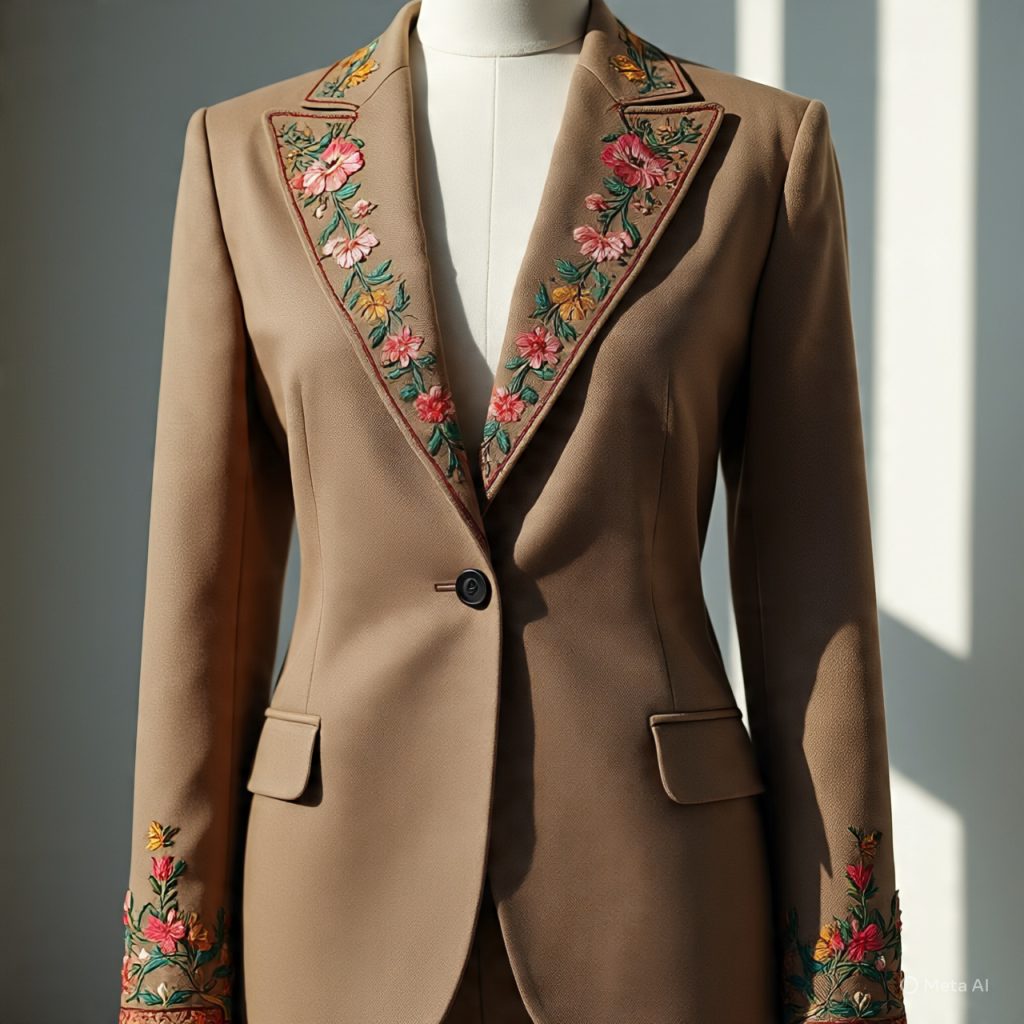
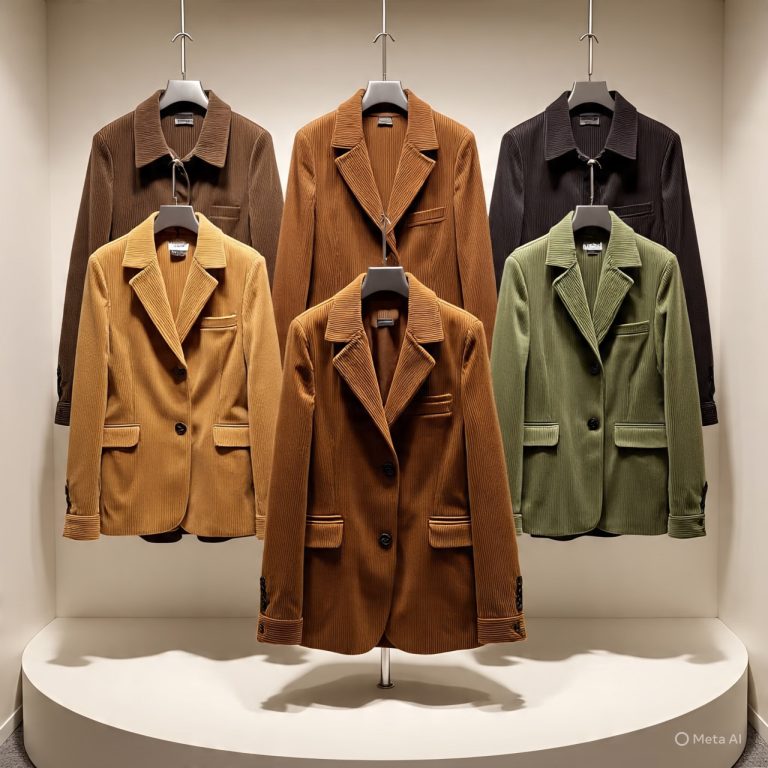
Structured blazers infused with delicate subcontinental embroidery are redefining professional style in global cities. Once reserved for festive attire, intricate threadwork now appears subtly along lapels, cuffs, and pockets — transforming classic tailoring into wearable art.
In London boardrooms and New York creative studios, women are pairing these embroidered blazers with neutral trousers, denim, or monochrome dresses. The result is confident power dressing rooted in cultural identity.
This evolution reflects how urban fashion is embracing heritage without compromising modern structure. It’s a refined statement — bold in meaning, understated in execution
7. The Elegant Kaftan.
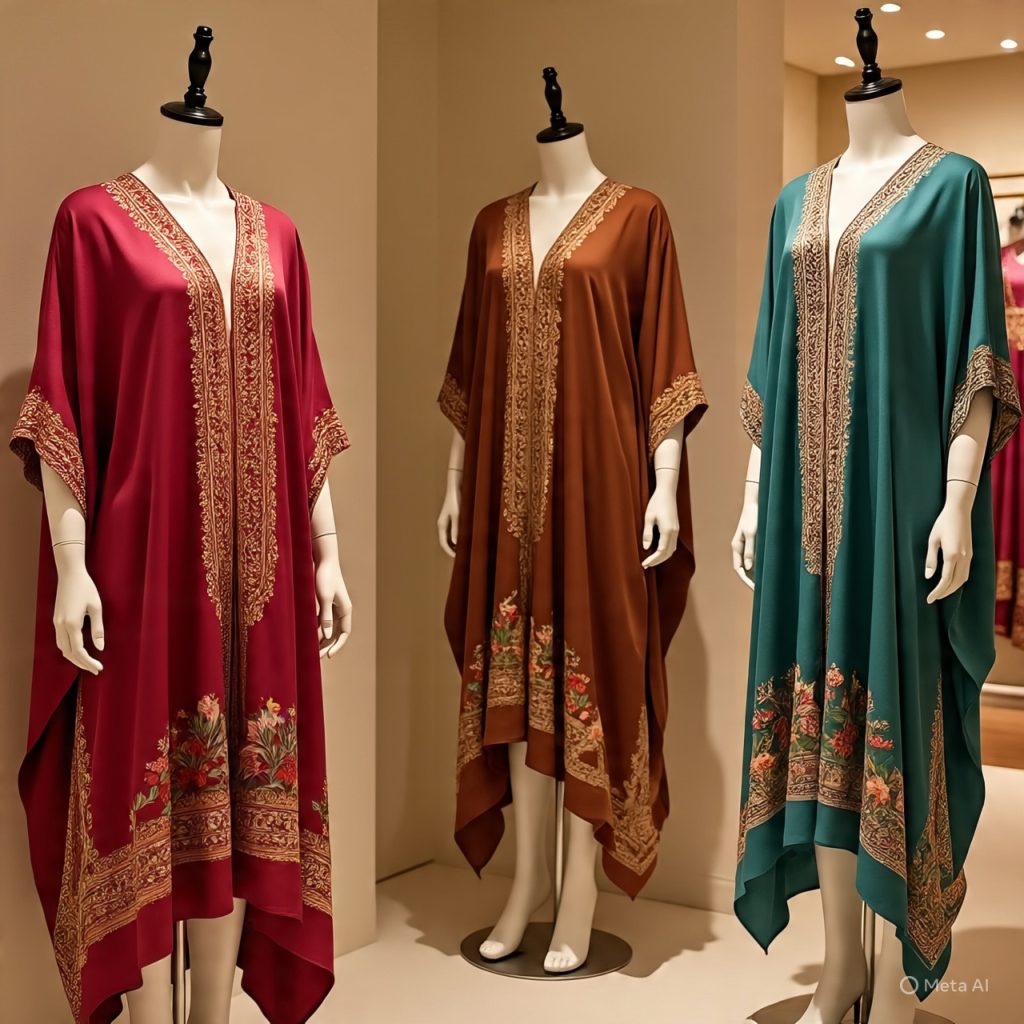
Flowing kaftans in silk and cotton with Mughal-inspired prints—urban comfort woven with royal heritage, ideal for travel, lounging, or upscale casual wear.
8. Palazzo Perfection.
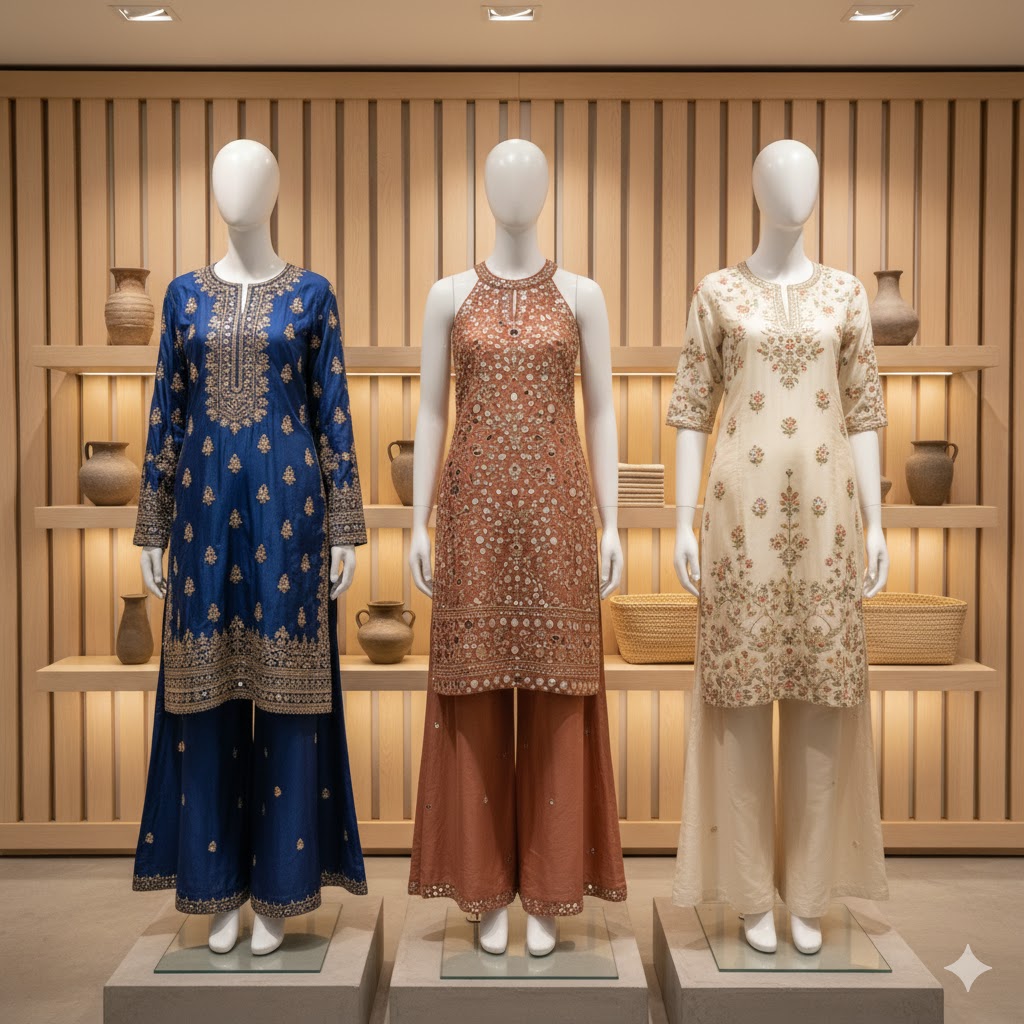
Palazzo pants paired with embroidered tunics—flow and freedom, loved equally in Delhi and Paris for their flattering movement and versatile styling. Comfort and cultural expression no longer compete — they coexist beautifully in today’s global wardrobes۔
9. The Contemporary Kurta Dress.
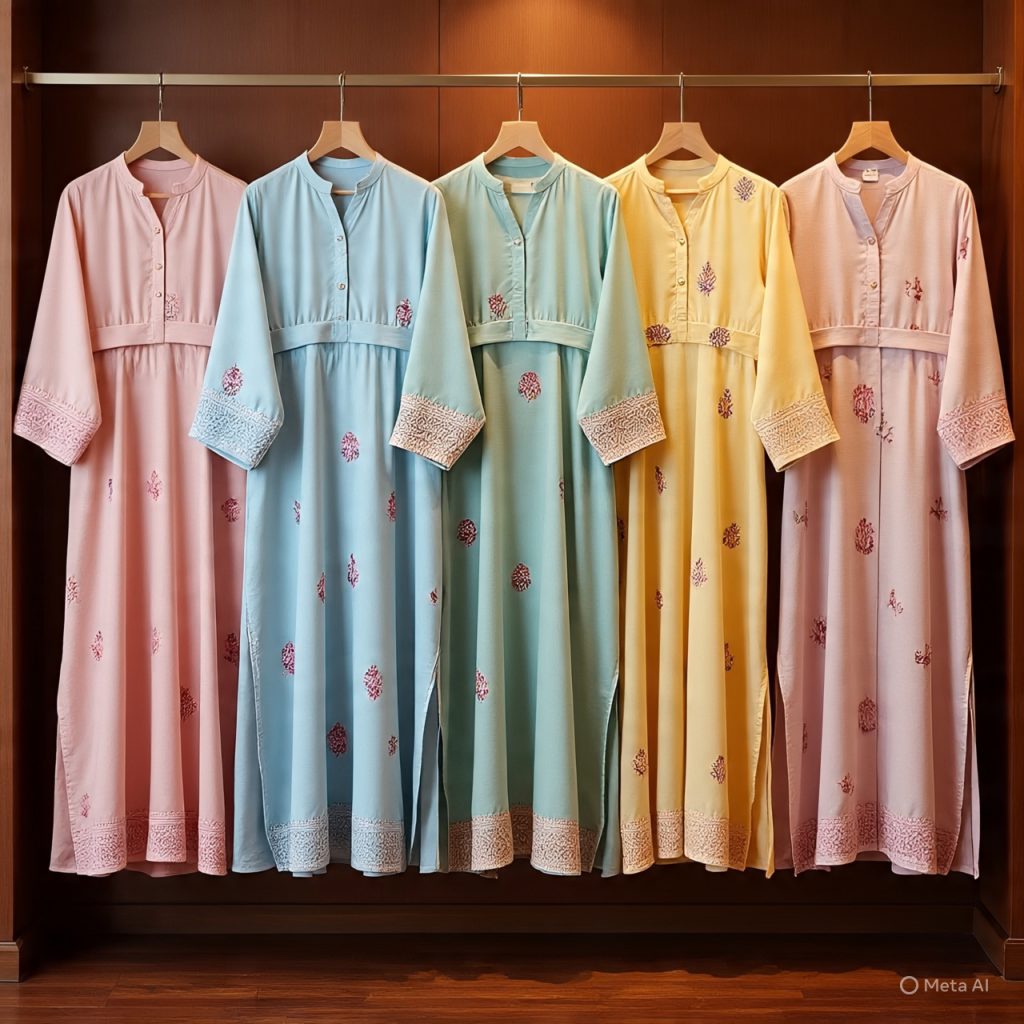
The contemporary kurta dress has evolved far beyond its traditional silhouette. Tailored cuts, structured shoulders, waist belts, and practical pockets make it perfectly suited for fast-paced urban life. Designers across South Asia are reimagining this staple with breathable fabrics, muted tones, and minimal embellishment to appeal to international tastes.
In cities like London and New York, the kurta dress is often styled with ankle boots or sleek heels, transforming it into a cross-cultural wardrobe essential. It’s heritage redefined for modern mobility — graceful yet functional
10. Bohemian Dupattas.
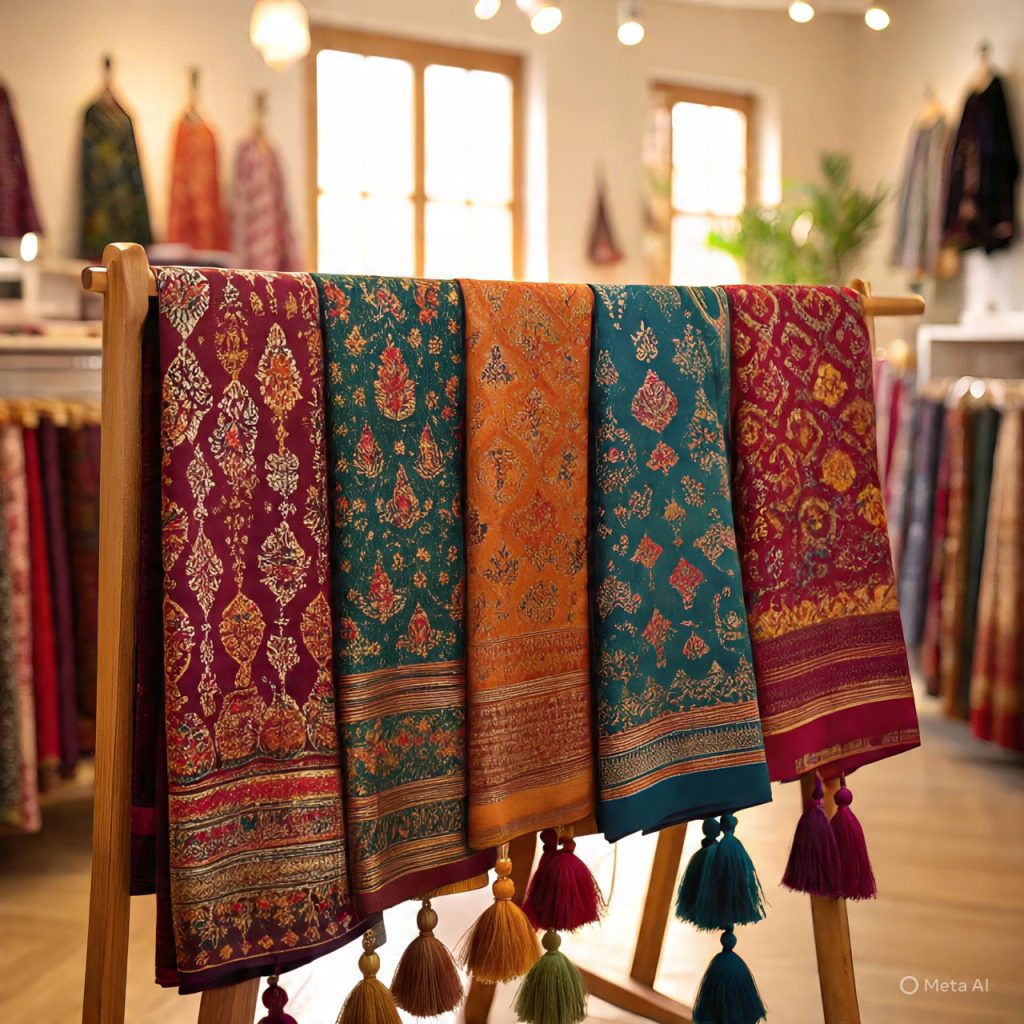
Once worn primarily as a traditional drape, the dupatta now plays a versatile role in global styling. Printed, tasselled, and delicately embroidered versions are paired with denim, maxi dresses, and even tailored blazers.
This shift reflects how subcontinental textiles are no longer confined to cultural occasions. Instead, they flow effortlessly into everyday wardrobes across Europe and America. The lightweight texture and artisanal detailing offer a handcrafted softness rarely found in mass-produced garments
11. The Chikankari Charm.
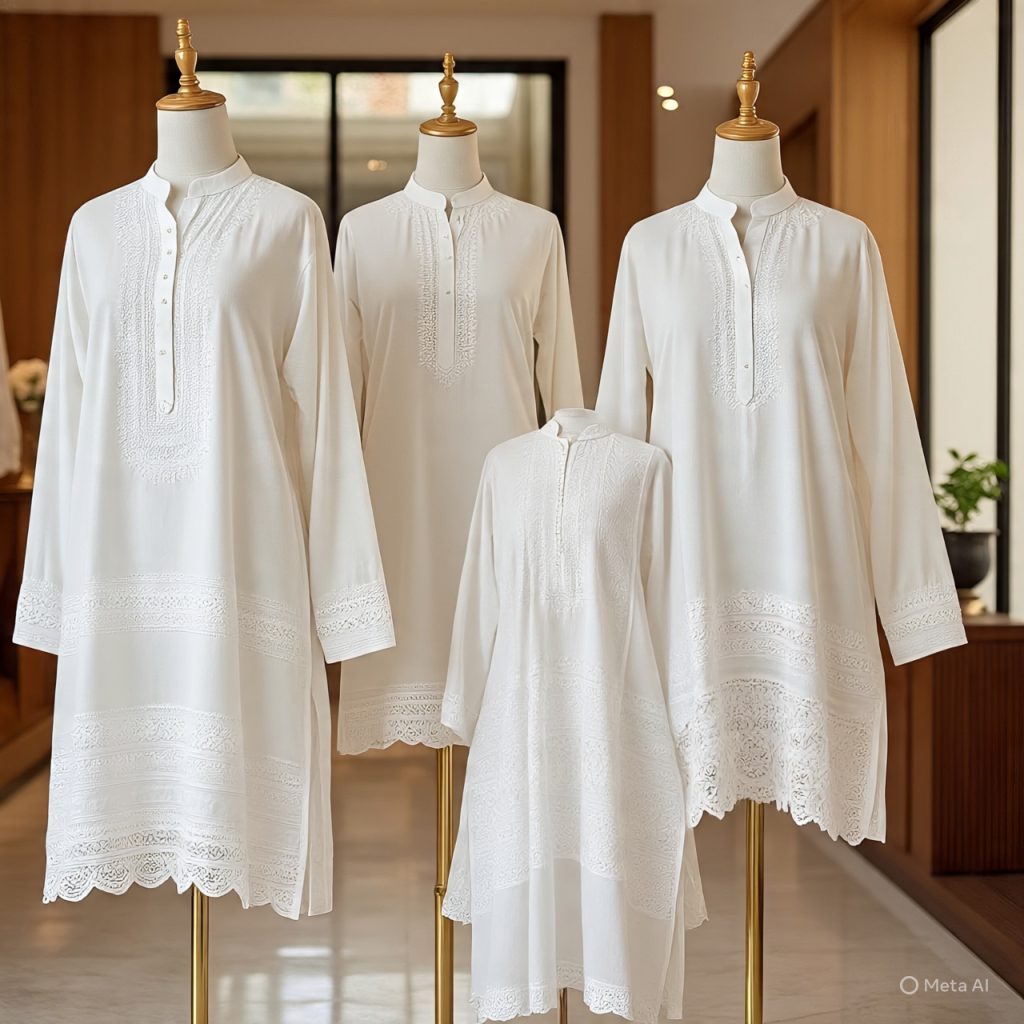
Originating in Lucknow, chikankari embroidery is known for its subtle white-on-white craftsmanship. Today, it appears in crisp cotton shirts, tunics, and summer dresses embraced by women from Karachi to London.
Its appeal lies in quiet elegance. In an era of bold statements, chikankari offers restraint — delicate threadwork that whispers rather than shouts. Styled with tailored trousers or linen skirts, it embodies understated sophistication.
12. Contemporary Shawls and Wraps.
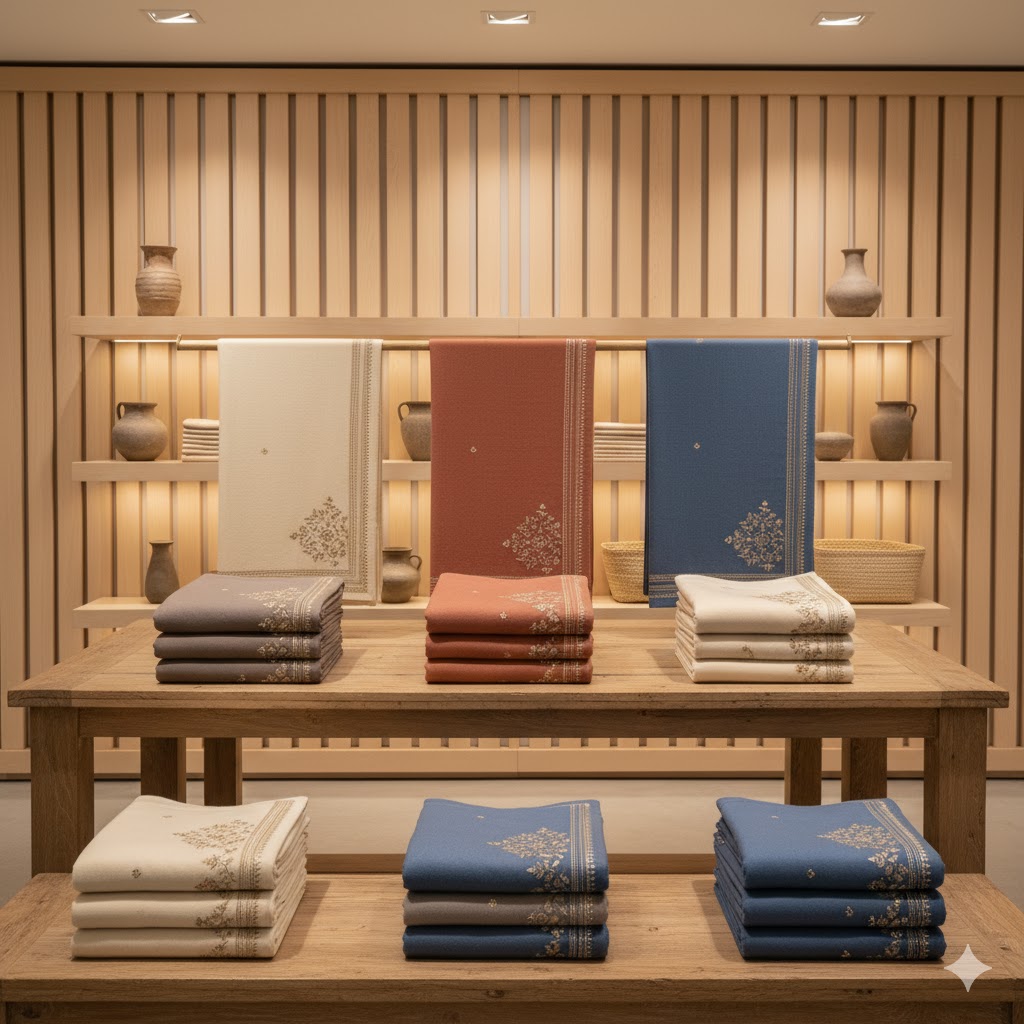
Pashmina and fine wool shawls have transitioned from ceremonial accessories to everyday luxury pieces. Modern interpretations favor minimalist borders, softer palettes, and lightweight layering.
In colder European climates, these wraps are styled as capes or draped over structured coats. They add depth without heaviness — blending warmth with refined design. The result is a seamless fusion of practicality and artistry۔ Across continents, these silhouettes prove that craftsmanship travels as confidently as the women who wear it.
13. Layered Kurti and Skirt Sets.
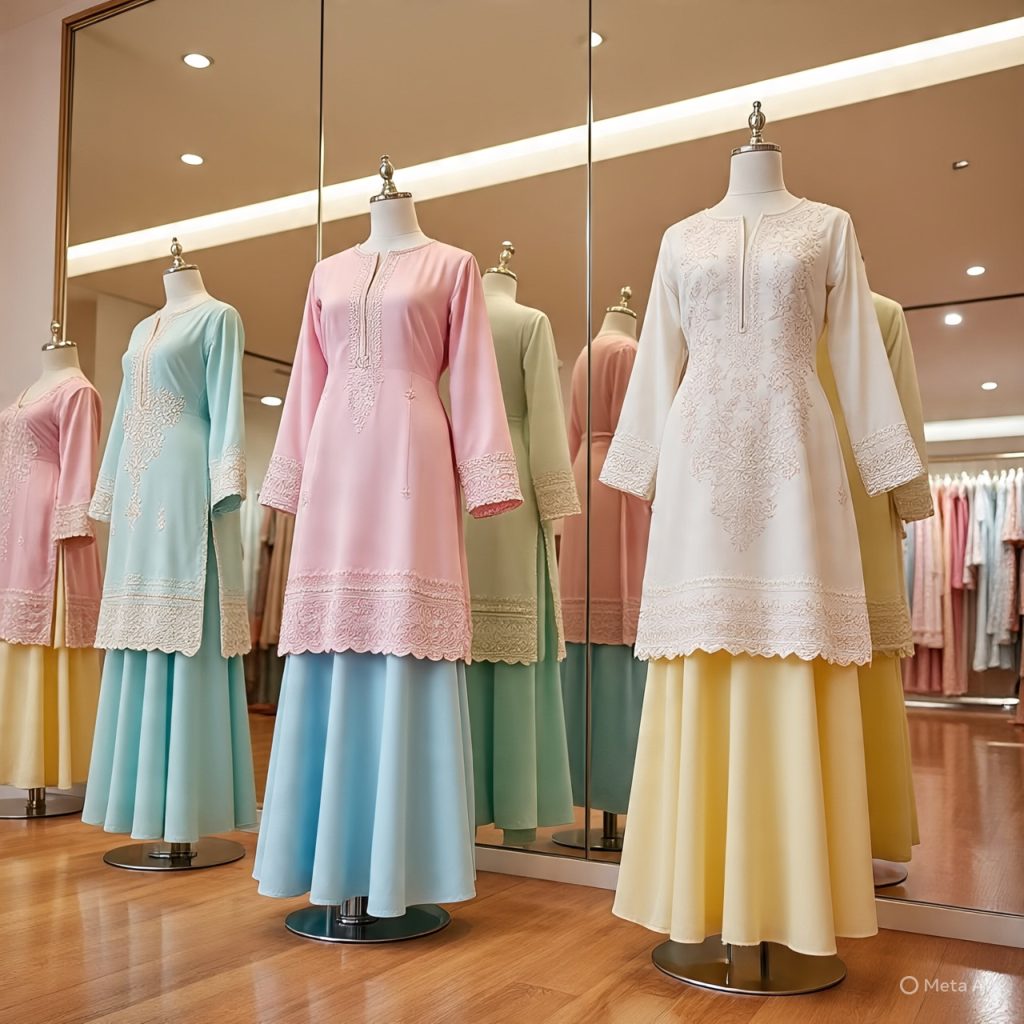
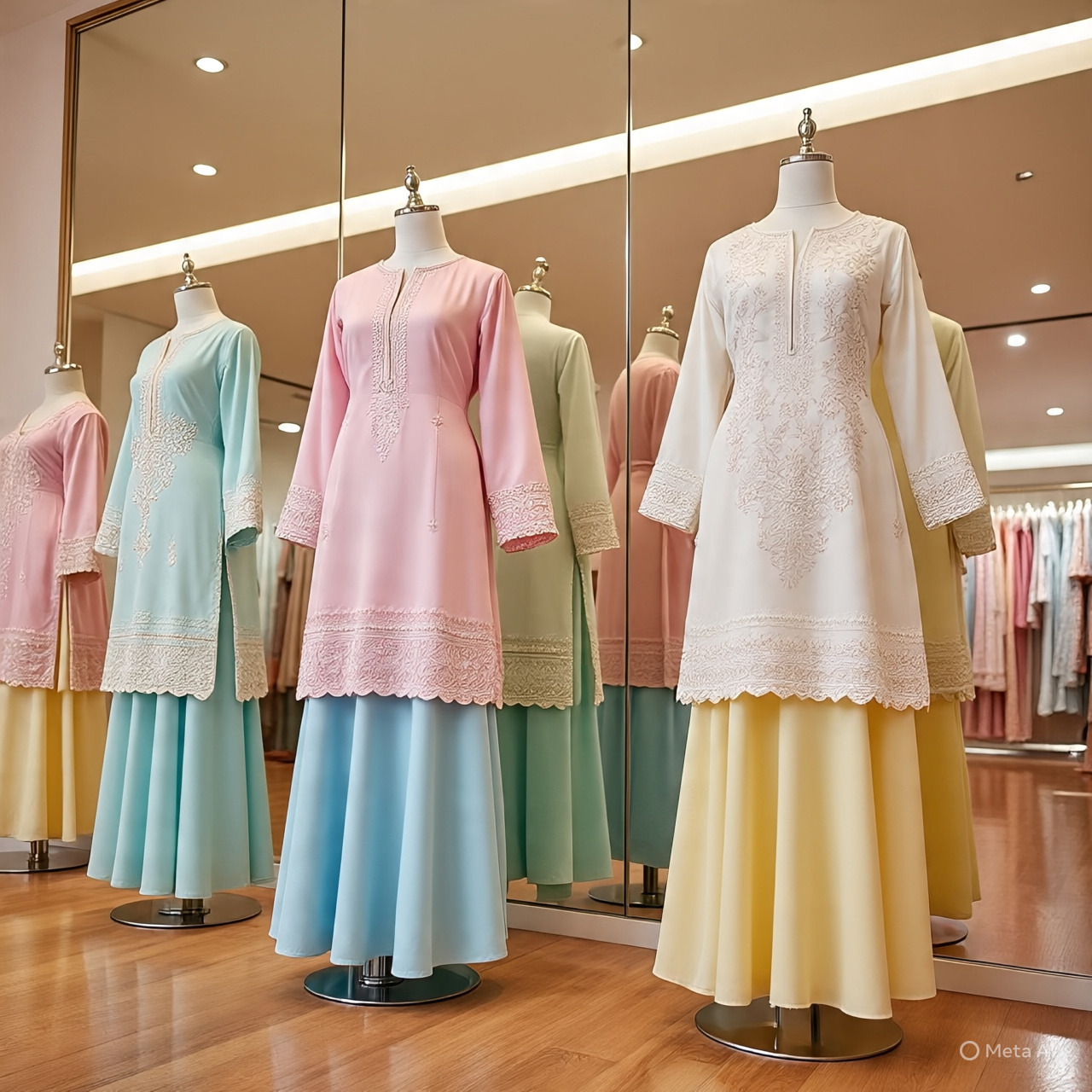
Inspired by royal courts yet simplified for urban living, layered kurti-and-skirt sets are experiencing a quiet revival. Contemporary versions feature lighter embroidery, breathable fabrics, and metallic accents that feel modern rather than ornate.
These ensembles are particularly popular for cultural events abroad, where women seek attire that honors heritage while aligning with cosmopolitan aesthetics. The layered silhouette creates movement and drama without overwhelming the wearer
14. Ajrak in the City.
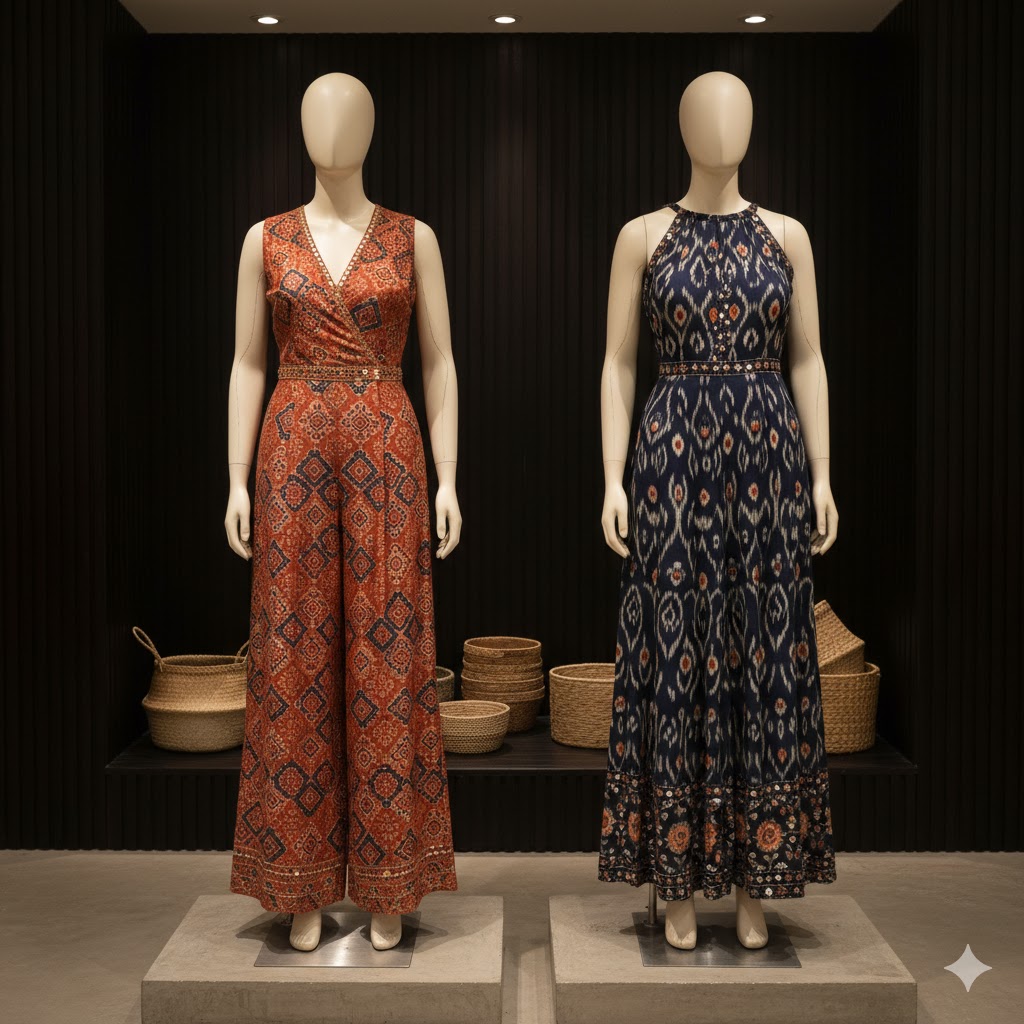
Ajrak, with its deep indigo, rust, and intricate block prints, has found renewed energy in metropolitan wardrobes. Designers now incorporate these traditional patterns into scarves, long coats, structured blazers, and even jumpsuits.
What makes Ajrak compelling internationally is its authenticity. Each motif carries centuries of craftsmanship, yet when styled with clean tailoring, it feels entirely contemporary. Heritage doesn’t fade — it adapts
15. The Minimalist Dupatta Dress.
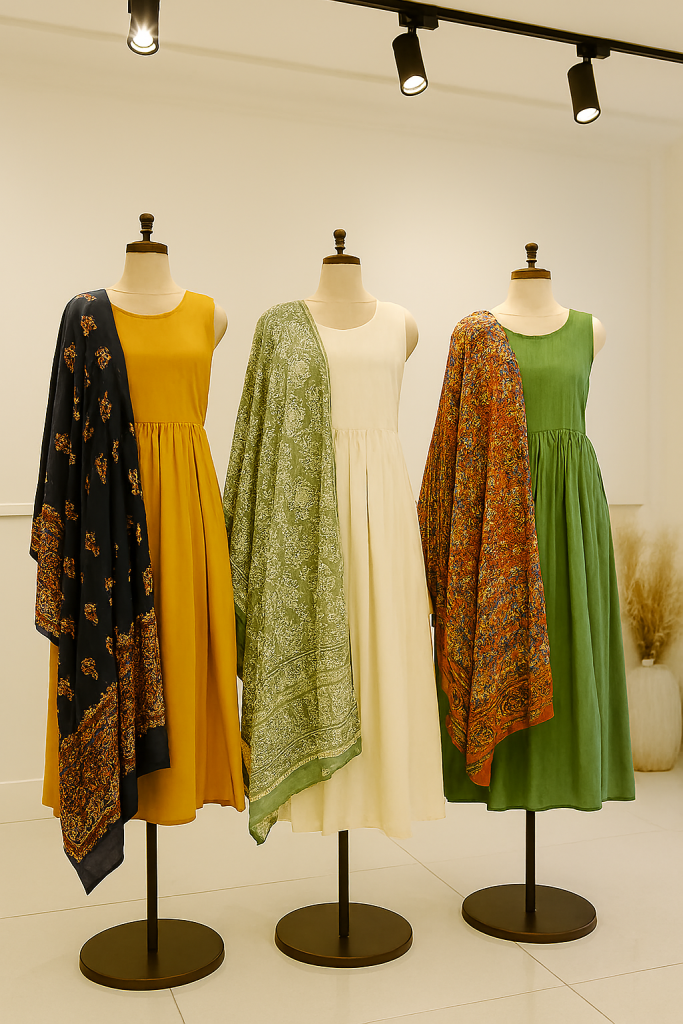
One of the most wearable adaptations is the minimalist dupatta dress — a soft, streamlined dress paired with a subtly printed drape. This pairing balances simplicity with cultural depth.
In global cities, this look resonates with women who appreciate refined silhouettes but still want a connection to ancestral artistry. It’s not costume — it’s conversation through cloth
16. The Global Influence of Subcontinental Design.
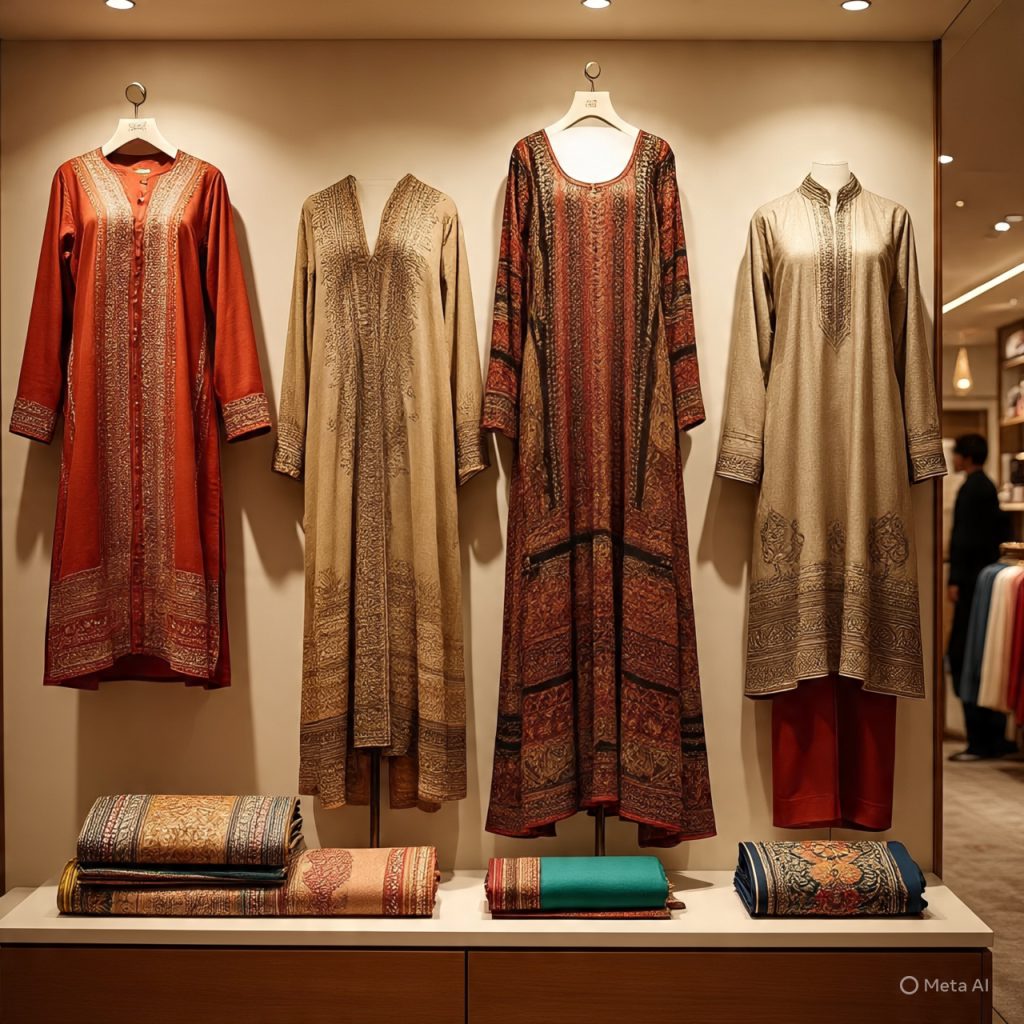
Across London, Paris, Toronto, and New York, multicultural communities are reshaping mainstream fashion conversations. Boutiques now feature handloom fabrics beside European tailoring, while runways celebrate embroidery once confined to regional ateliers. This exchange reflects more than aesthetics — it represents cultural dialogue expressed through clothing.
Urban subcontinental style has become a symbol of hybrid identity: rooted in history, yet fluent in modern design language
Final Thoughts: Where Tradition Travels.
Urban women’s fashion from the subcontinent is no longer a niche abroad — it is a vibrant presence woven into global style culture. What began as cultural preservation has transformed into creative innovation.
These garments are more than fabric and form. They embody movement, memory, and modernity. In every silhouette lies a bridge between continents, proving that style does not recognize borders — only stories waiting to be told