Exterior Lighting for House Front (Complete Guide for Design, Safety, and Modern Appeal)
Introduction
The right exterior lighting for house front can completely transform the overall appearance of your home by adding depth, dimension, and a sense of luxury. A well-planned house exterior lighting design does more than just brighten the space—it highlights architectural details, improves nighttime visibility, and enhances the overall curb appeal of your property. When done correctly, lighting creates a welcoming atmosphere that makes your home stand out even from a distance.
On the other hand, poor or unbalanced front facade lighting can easily make even a beautifully designed house look flat, overexposed, or visually confusing. That is why understanding placement, lighting types, and design balance is essential. This guide will help you explore practical ideas, techniques, and modern approaches to outdoor front lighting design so you can achieve both beauty and functionality.
1 . What is Exterior Lighting for House Front?
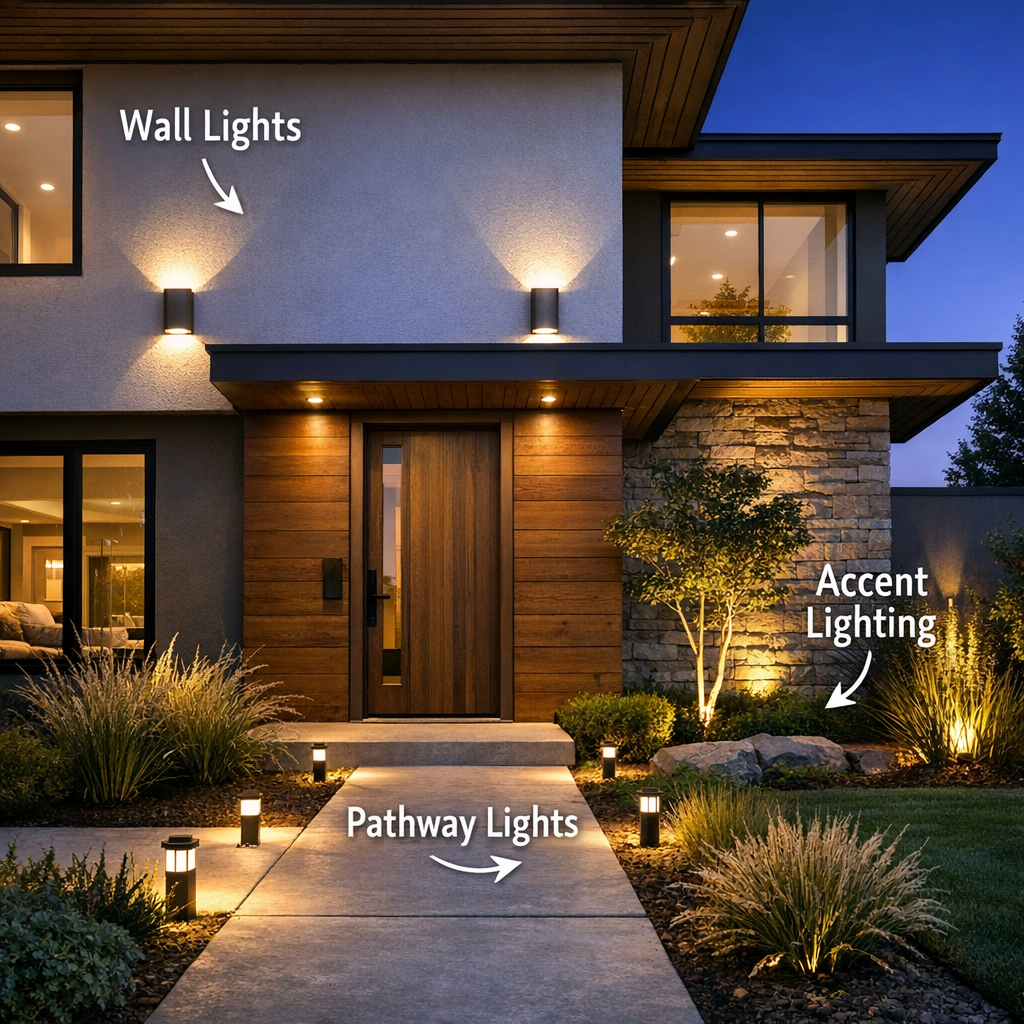
Exterior lighting for house front refers to the complete lighting system installed outside the front elevation of a house to illuminate and enhance its appearance during nighttime. It includes all lighting elements that contribute to visibility, safety, and decorative enhancement of the exterior structure.
This system typically includes wall-mounted lights, pathway illumination, entrance lighting, and accent lighting features that highlight specific architectural elements. In modern house exterior lighting design, these components are carefully balanced to ensure both functionality and visual appeal, creating a well-structured and attractive outdoor environment.
Exterior lighting refers to all lighting elements used outside your house to illuminate the front area.
This includes:
- wall-mounted lights
- pathway lighting
- entrance lighting
- accent lighting
These lights serve both functional and aesthetic purposes.
2. Why Exterior Lighting is Important
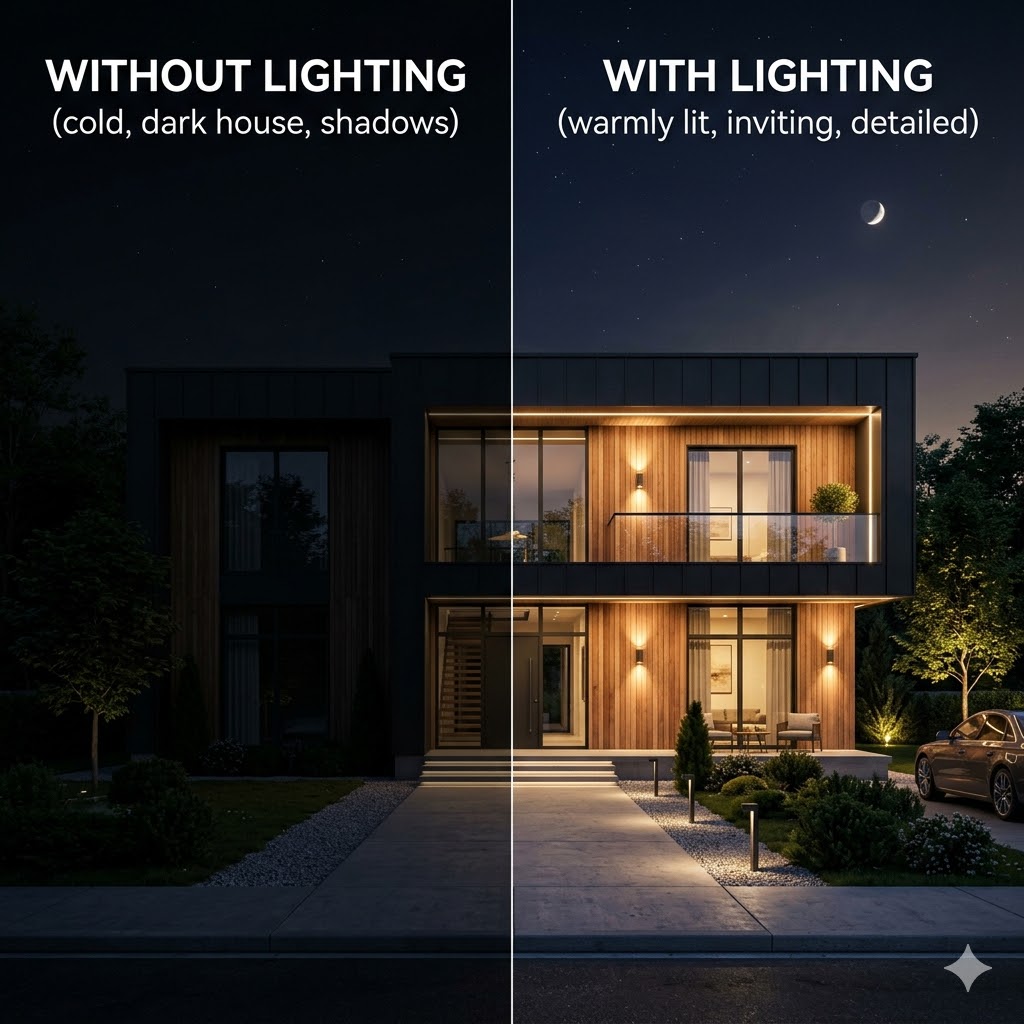
Proper front facade lighting plays a crucial role in defining how your home is perceived at night. It significantly improves curb appeal by highlighting textures, shapes, and design elements that may not be visible during the day. A well-lit exterior immediately gives a sense of elegance and attention to detail.
Beyond aesthetics, outdoor front lighting design also improves safety by eliminating dark zones around entrances, driveways, and walkways. It also enhances security by deterring unwanted activity, making your home feel safer and more protected. Overall, lighting is not just decorative—it is a functional necessity for modern homes.
Exterior lighting plays a key role in how your house looks and functions.
It helps:
- improve curb appeal
- highlight architectural features
- increase safety and visibility
- enhance security
A well-lit house front looks complete and inviting.
3. Types of Exterior Lighting for House Front
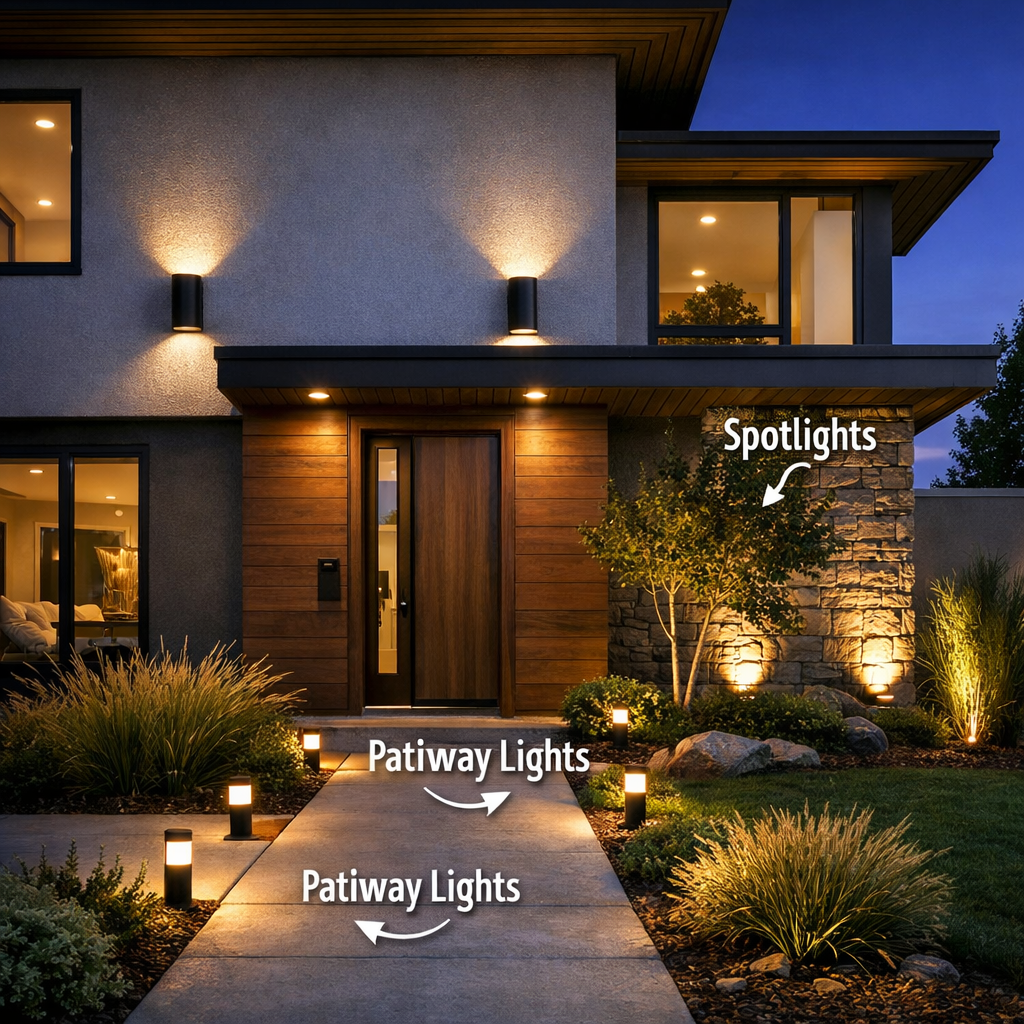
Different types of house exterior lighting work together to create a balanced visual effect. Wall lights are commonly used to provide general illumination and highlight vertical surfaces of the structure. They add rhythm and structure to the overall elevation.
Pathway lights are installed along walkways and driveways to ensure safe movement while also guiding guests toward the entrance. Spotlights are used as accent tools in architectural exterior lighting, drawing attention to specific features like textured walls, stone cladding, or landscape elements. Entrance lighting focuses directly on the main door, creating a welcoming and visually strong focal point.
Wall Lights
Mounted on walls to provide general illumination and highlight structure.
Pathway Lights
Placed along walkways to guide movement and improve safety.
Spotlights
Used to highlight specific features like walls, trees, or textures.
Entrance Lighting
Focused lighting near the main door to create a welcoming feel.
Each type serves a different purpose and should be used accordingly.
4. Best Lighting Placement Strategies
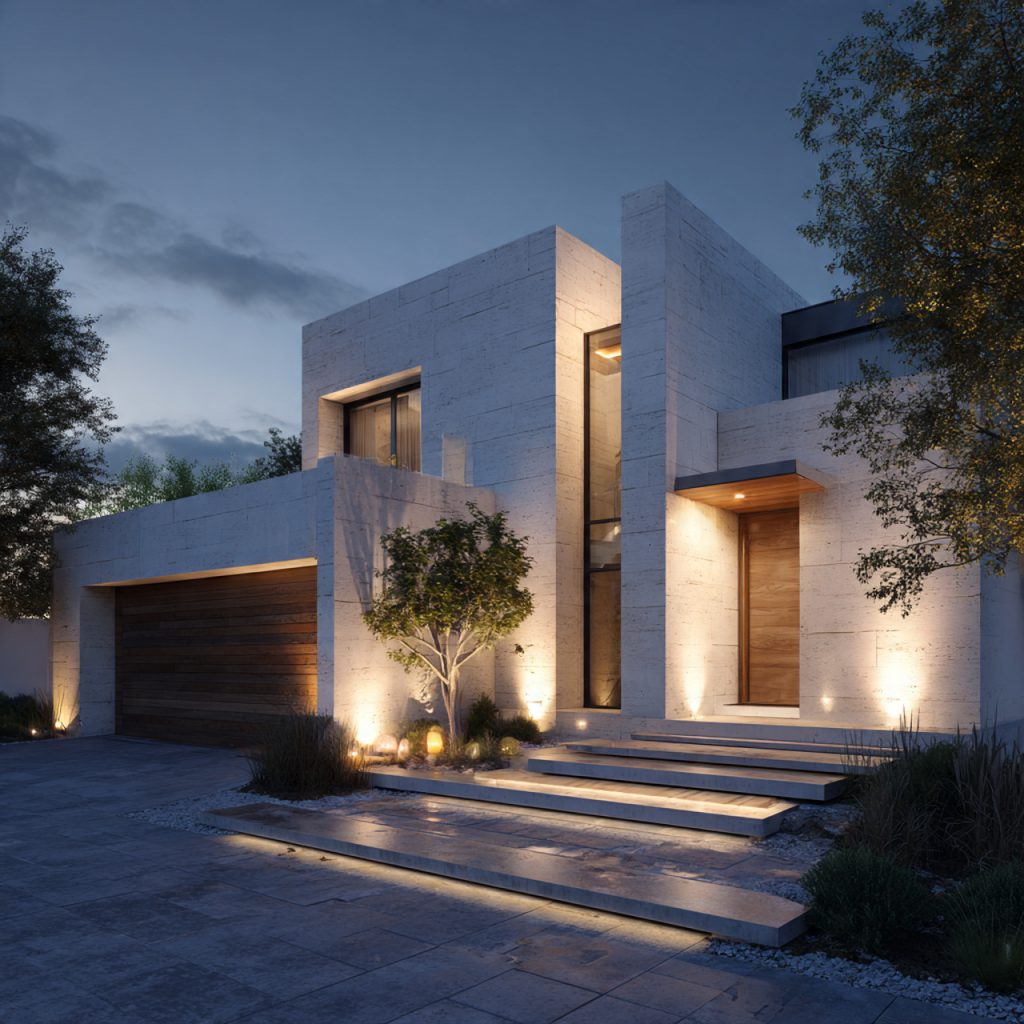
Placement is one of the most important aspects of successful front facade lighting design. Even high-quality fixtures can look ineffective if they are not positioned correctly. Lights should always be placed strategically near architectural highlights such as columns, textures, or entrance frames to create depth and shadow contrast.
A balanced outdoor front lighting design avoids over-lighting, which can flatten the visual structure of the house. Instead, a layered approach works best, where different lighting types are distributed evenly to create harmony and visual flow across the entire front elevation.
Placement is more important than the number of lights.
- place lights near key features
- highlight textures and materials
- ensure even distribution
- avoid over-lighting
Proper placement creates balance and depth.
5. Choosing the Right Light Color
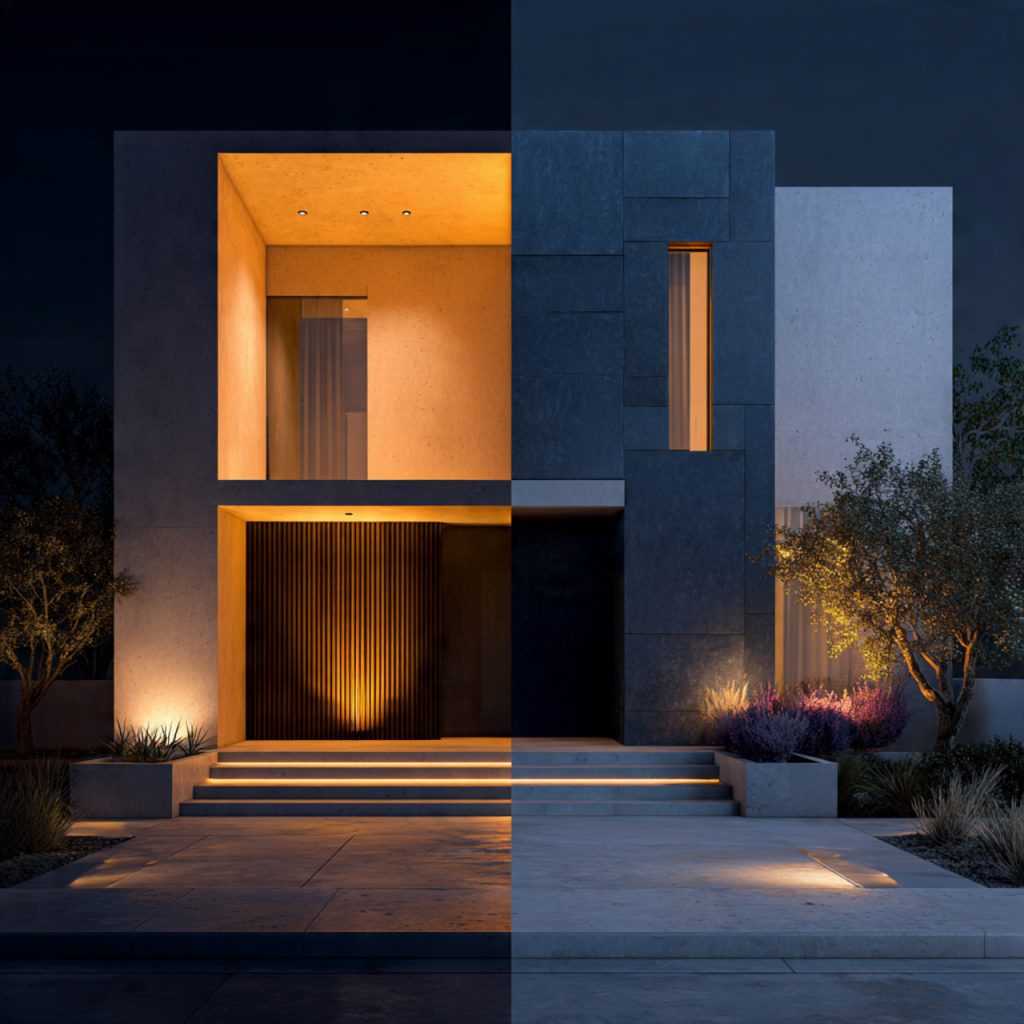
Light color has a strong impact on the mood and appearance of your house exterior lighting system. Warm white lighting is generally preferred for residential homes because it creates a soft, cozy, and welcoming atmosphere. It also enhances materials like brick, wood, and stone more naturally.
Cool white lighting, while brighter, can sometimes appear too harsh for residential front facade lighting, especially in compact or modern homes. Choosing the right tone ensures your lighting design complements the architecture instead of overpowering it.
Image Prompt:
House facade showing warm vs cool lighting comparison at night, realistic composition
Alt Text:
exterior lighting color warm vs cool house front facade design comparison
Light color affects the overall appearance.
- warm white creates a cozy and modern look
- cool white gives a brighter but harsher effect
Warm lighting is generally preferred for residential exteriors.
6. Lighting Design for Different House Styles
Different architectural styles require different approaches to outdoor front lighting design. Modern houses typically benefit from minimal and clean lighting setups that focus on simplicity and symmetry. Hidden LED strips, linear wall lights, and subtle accent lighting work best for contemporary structures.
Traditional or classic homes, on the other hand, may require slightly more decorative fixtures, but still in a controlled manner. The goal of architectural exterior lighting is always to enhance structure without overwhelming it, regardless of design style.
Modern houses benefit from clean and minimal lighting.
Use:
- hidden LED strips
- simple wall lights
- focused accent lighting
Avoid excessive or decorative fixtures.
7. How to Highlight Front Elevation Features
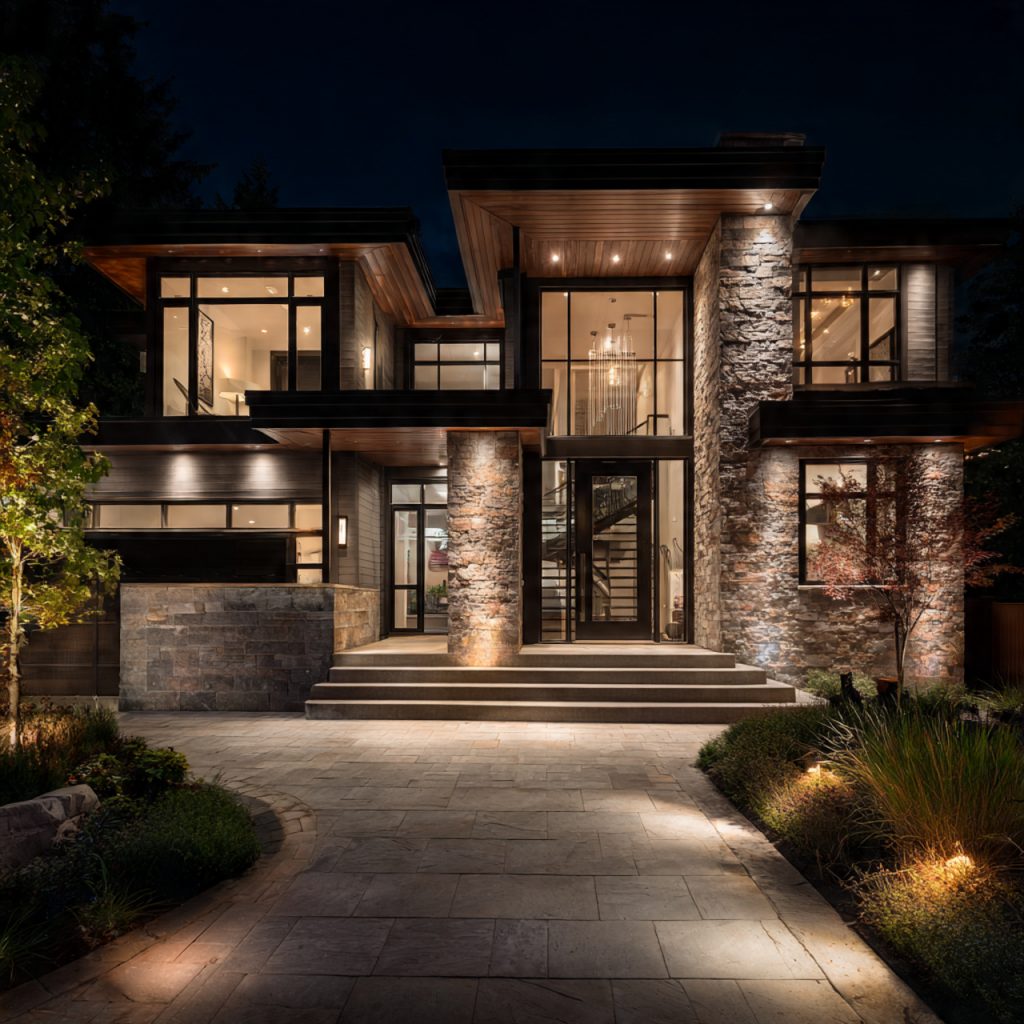
One of the main purposes of exterior lighting for house front is to emphasize architectural beauty. Lighting can be used strategically to highlight textures, vertical panels, stone finishes, and entrance designs, making the facade visually more dynamic at night.
Accent lighting plays a major role in this process. By directing light onto specific features, you can create shadows and contrast that add depth to the building. This approach is widely used in modern house exterior lighting design to create a premium and sophisticated appearance.
Lighting can enhance key elements.
Highlight:
- accent walls
- entrance area
- vertical panels
- textures
This creates a visually attractive facade.
8. Energy-Efficient Lighting Options
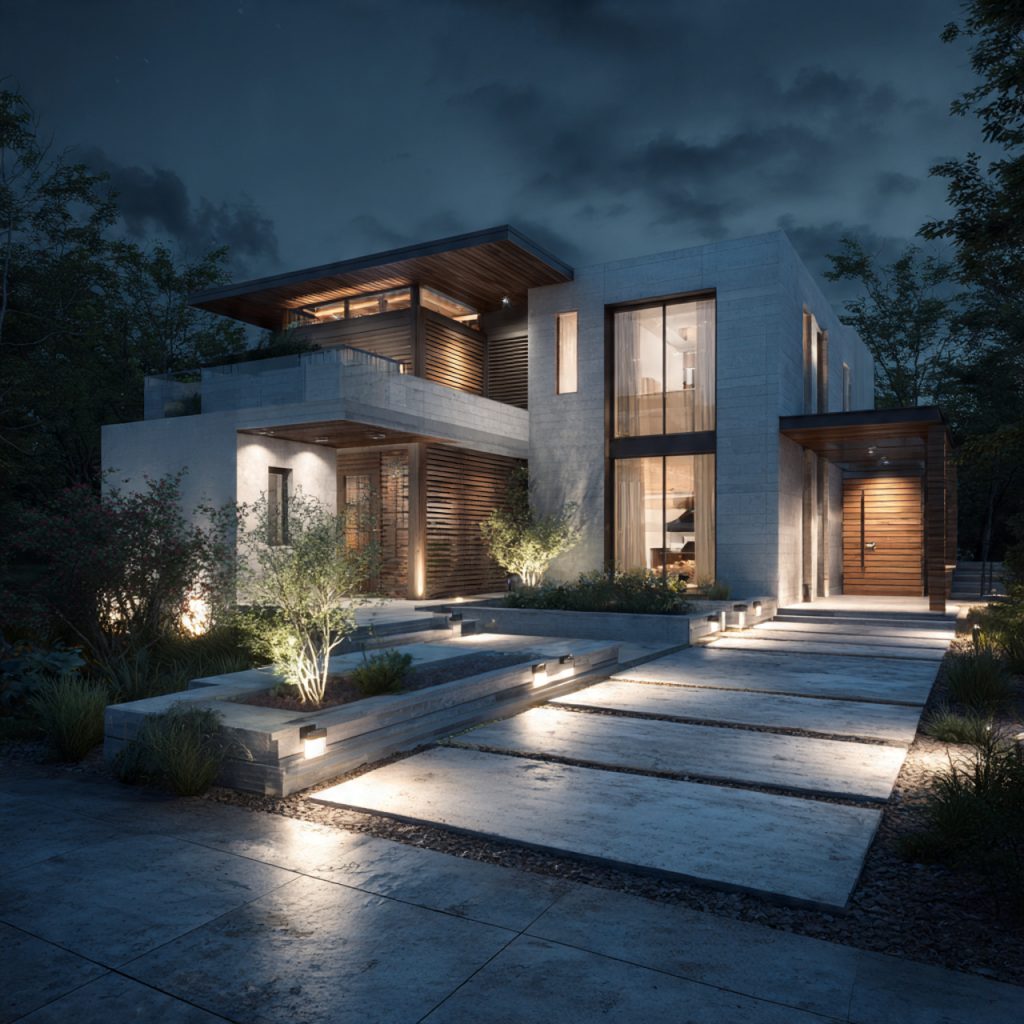
Modern front facade lighting systems increasingly focus on energy efficiency. LED lights are the most commonly used option because they consume less power, last longer, and provide consistent brightness. They are ideal for both decorative and functional lighting purposes.
Solar-powered lights are another excellent option for outdoor front lighting design, especially for pathways and garden areas. Low-energy fixtures reduce electricity costs while still maintaining strong visual impact, making them a practical choice for long-term use.
Energy efficiency is important for long-term use.
Use:
- LED lights
- solar-powered lights
- low-energy fixtures
These reduce electricity costs and maintenance.
9. Common Mistakes to Avoid
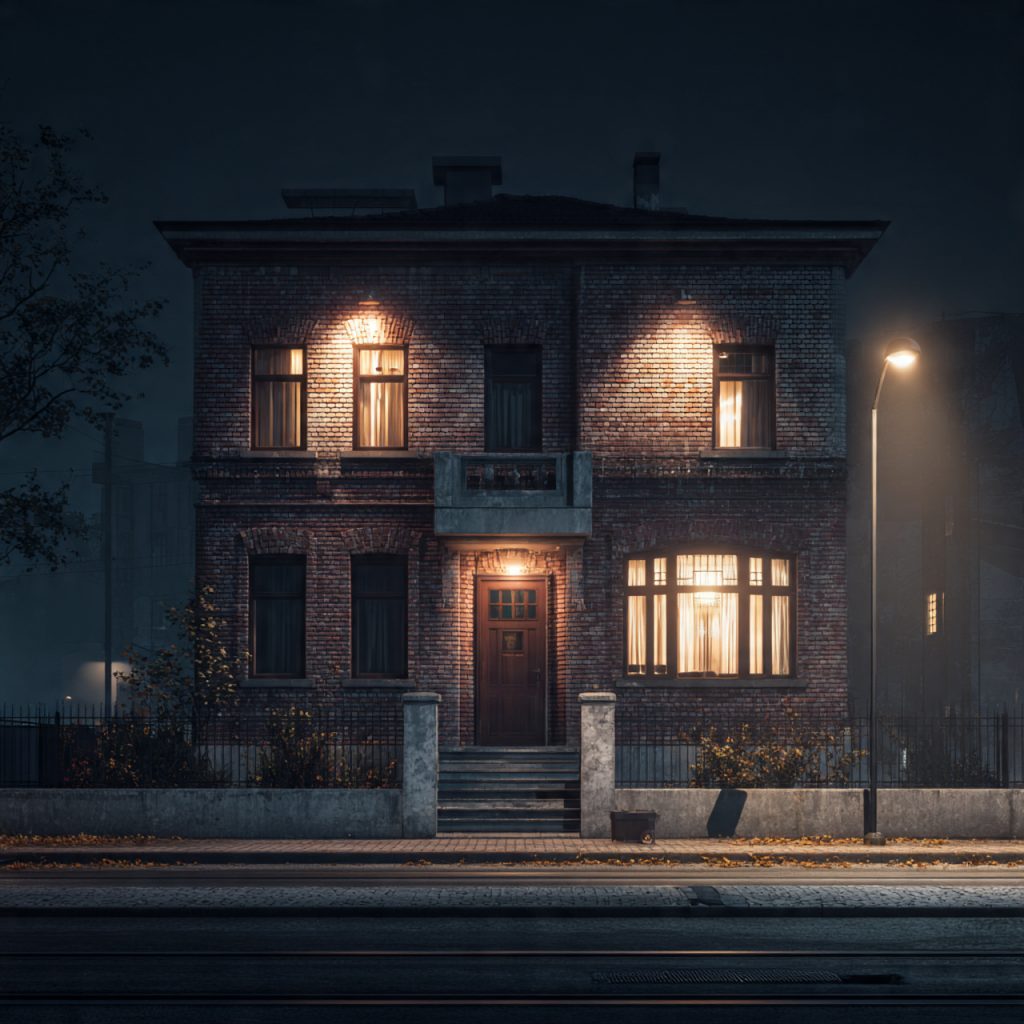
Many homeowners make mistakes when designing house exterior lighting, which can reduce the overall visual impact. One of the most common errors is using too many lights, which creates glare and removes architectural depth.
Another mistake is uneven placement, where some areas are over-lit while others remain dark. Ignoring key architectural features or using overly bright lighting can also harm the balance of front facade lighting, making the house look unnatural instead of elegant.
Avoid these mistakes:
- using too many lights
- uneven placement
- harsh or overly bright lighting
- ignoring key areas
These mistakes reduce visual quality.
10. Budget-Friendly Lighting Ideas
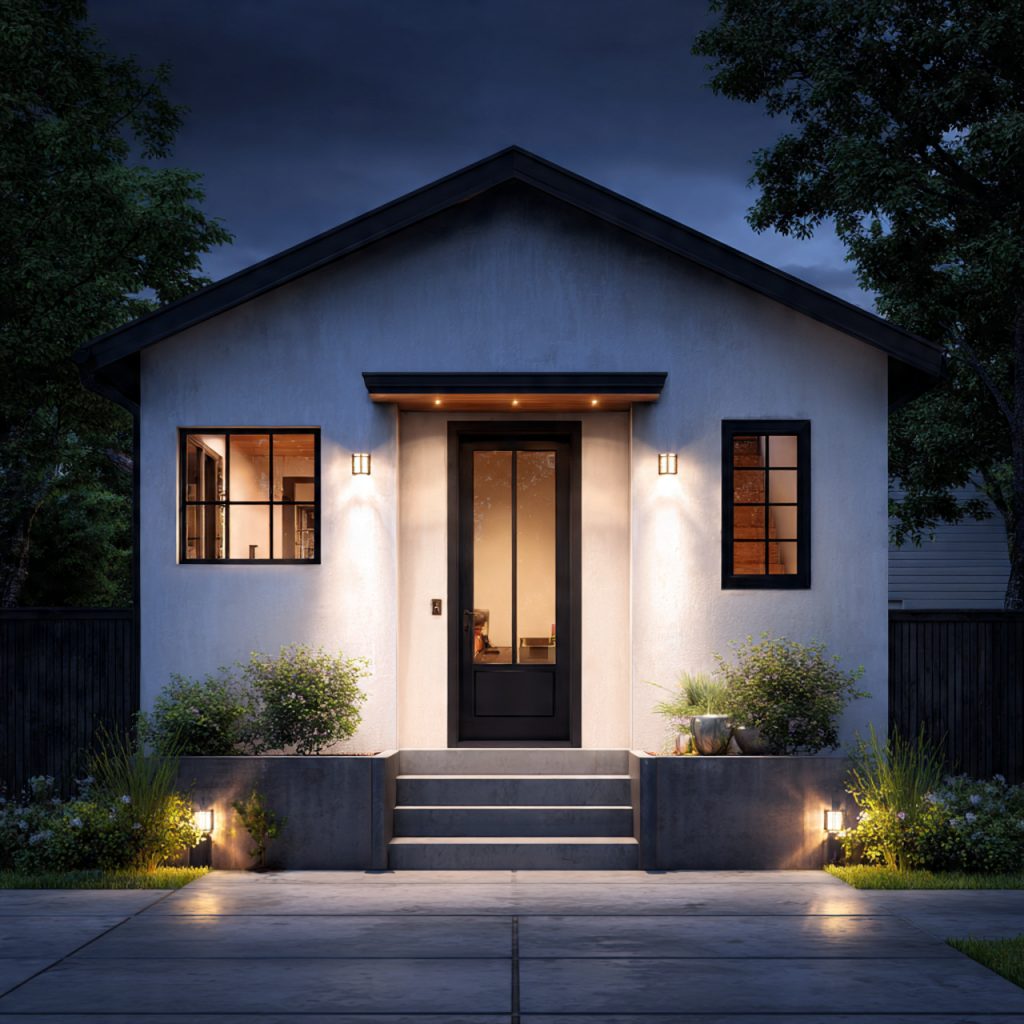
You don’t need a large budget to achieve effective outdoor front lighting design. Simple wall-mounted lights combined with LED strips can create a powerful visual effect when placed correctly. Focusing on essential areas like the entrance and main facade can significantly improve appearance.
Even minimal house exterior lighting design can look premium if it is well-planned. The key is not quantity but smart placement and selection of lighting elements that highlight important architectural features.
You can improve lighting without spending much.
- use basic wall lights
- install LED strips
- focus on entrance lighting
Simple lighting can still create a strong impact.
11. Safety and Security Benefits
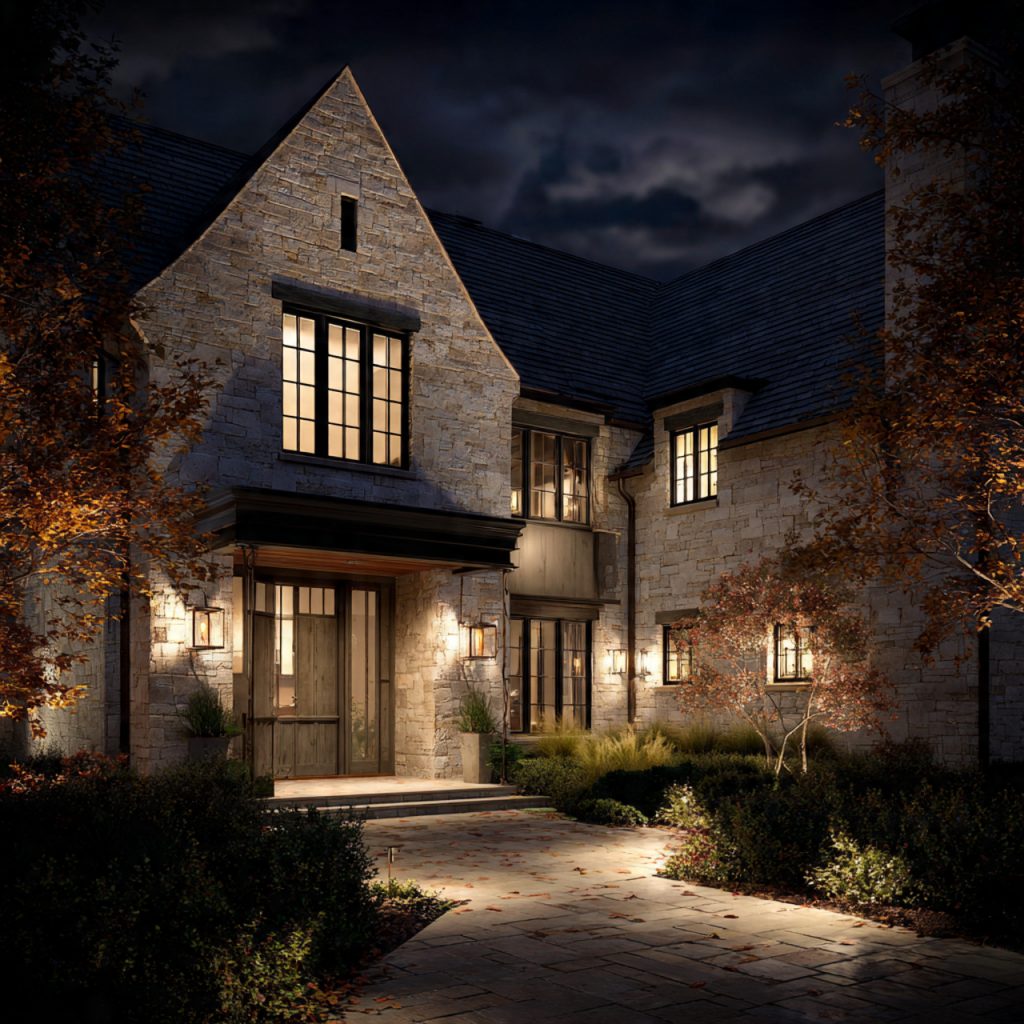
One of the most practical advantages of exterior lighting for house front is improved safety. Proper lighting eliminates dark areas around entrances, walkways, and driveways, making movement safer during nighttime.
It also enhances home security by reducing hiding spots and increasing visibility around the property. A well-lit exterior acts as a natural deterrent, making front facade lighting an essential part of modern home safety planning.
Exterior lighting improves safety.
- reduces dark areas
- increases visibility
- discourages unwanted activity
It makes your home more secure.
12. Cost Considerations
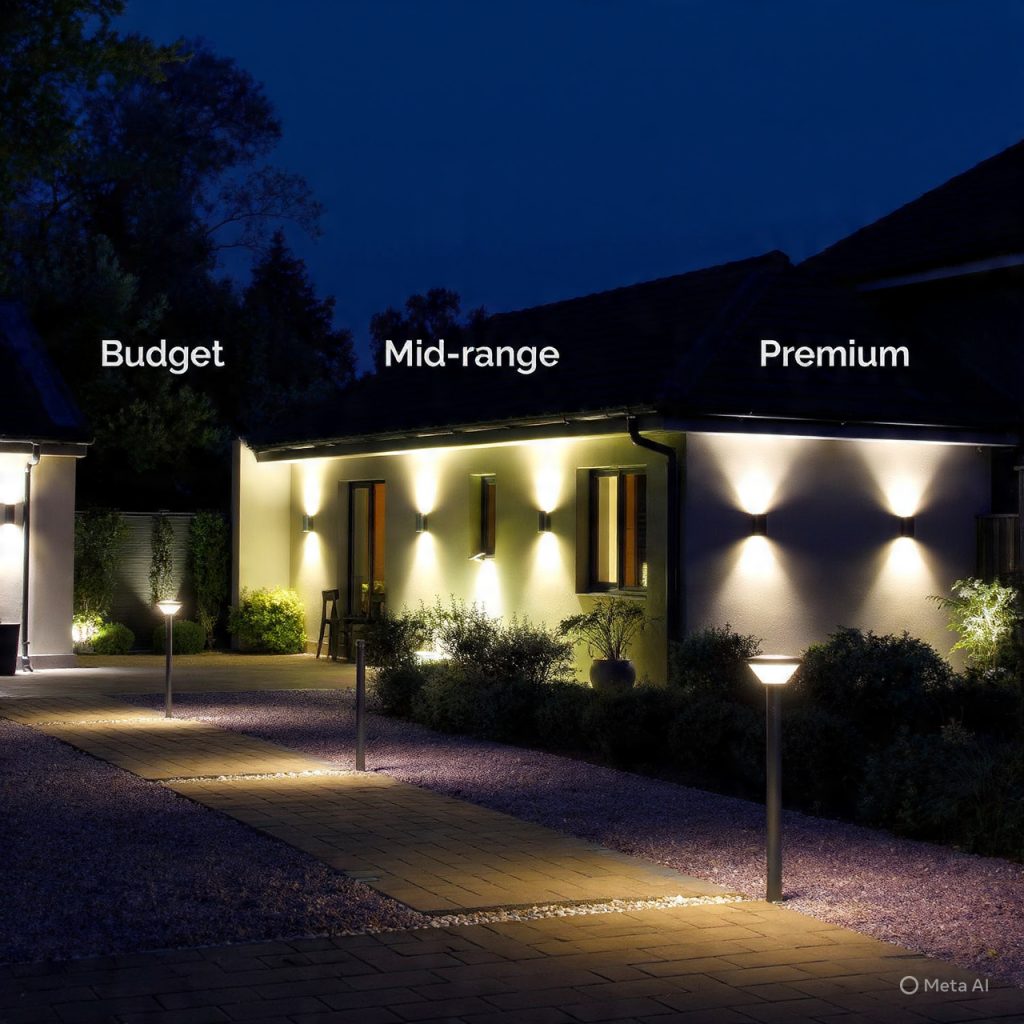
The cost of a house exterior lighting system varies depending on the number of fixtures, quality of materials, and complexity of installation. Basic setups with wall and pathway lights are relatively affordable, while advanced architectural exterior lighting systems with smart controls can be more expensive.
However, investing in quality lighting often pays off in the long run due to durability, lower maintenance, and improved energy efficiency. A balanced budget approach ensures both performance and aesthetic value.
Cost depends on:
- number of lights
- type of fixtures
- installation
Simple setups are affordable, while advanced systems cost more.
13. Practical Tips for Best Results
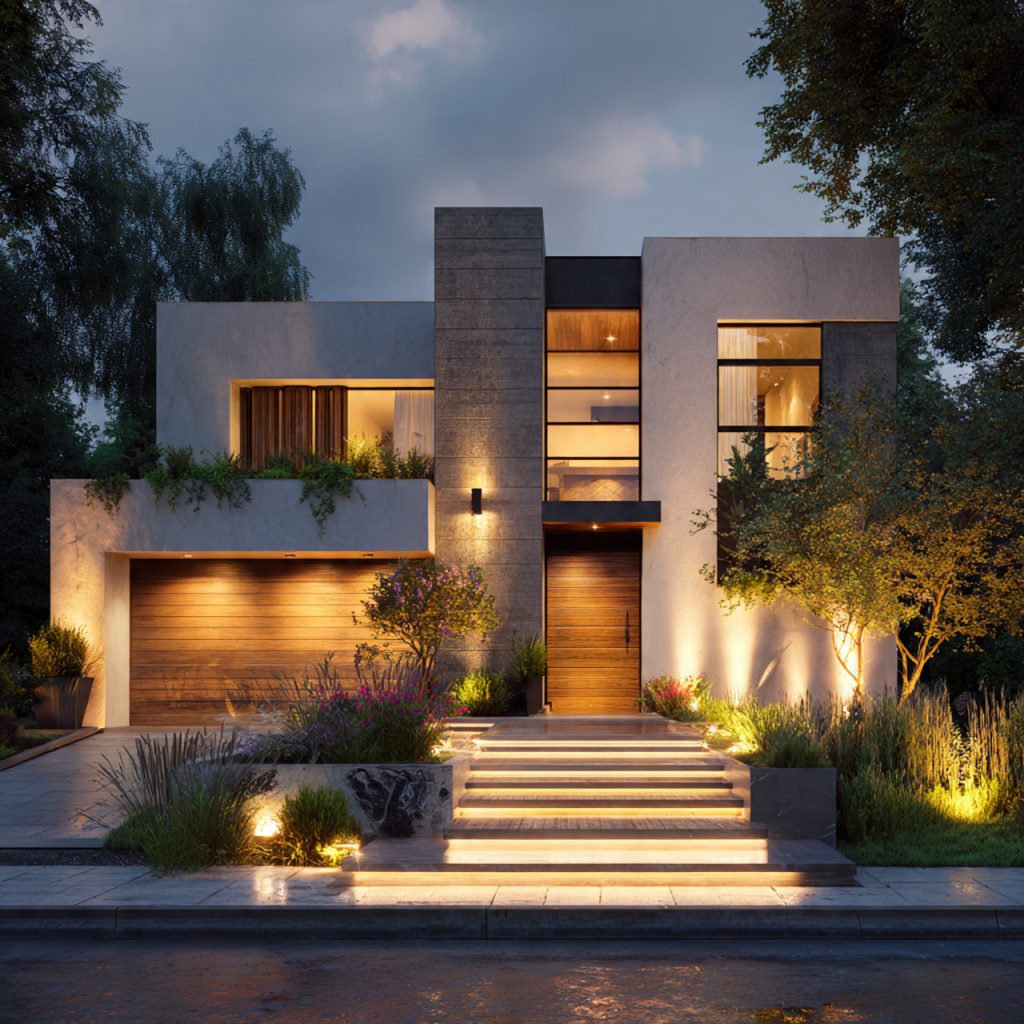
To achieve the best results in front facade lighting design, it is important to focus on simplicity and balance. Instead of overloading the exterior with too many fixtures, choose fewer but strategically placed lights that highlight the structure effectively.
Always prioritize warm lighting tones for residential homes and ensure that key architectural features are properly emphasized. Maintaining consistency and avoiding clutter will help you create a professional and visually appealing outdoor front lighting design.
Focus on quality rather than quantity.
- use fewer but well-placed lights
- choose warm tones
- highlight important areas
- maintain balance
These steps create a professional look.
Final Insight
Exterior lighting is not just an addition. It is an essential part of front elevation design.
With proper planning, placement, and selection, lighting can completely transform your house front and make it look modern, safe, and visually appealing.
FAQs About Exterior Lighting for House Front
What is the best lighting for house front?
Wall-mounted LED lights and warm-toned fixtures are generally considered the most effective for modern house exterior lighting.
Is warm or cool light better?
Warm light is preferred for residential front facade lighting as it creates a more natural and inviting atmosphere.
How many lights should I use?
The number depends on your design, but it is always better to use fewer well-placed lights rather than overloading the exterior.
Can lighting improve house appearance?
Yes, proper exterior lighting for house front significantly enhances curb appeal and architectural visibility.
Are LED lights good for exterior use?
Yes, LED lights are energy-efficient, long-lasting, and ideal for outdoor front lighting design.
Does lighting improve security?
Absolutely, it increases visibility and reduces hidden dark areas around the house.
Related
- energy-efficient lighting solutions
- outdoor lighting safety recommendations
- Small-Front House Elevation Design: Smart Ideas for Modern Compact Homes
- Modern Small House Design: Smart Ideas for Stylish Living
- 10 Modern Boundary Wall Design Ideas for Stylish and Secure Homes
- Modern Home Decor: The Complete Guide to Stylish, Functional Living.
- Modern House Design: Complete Guide to Planning, Style & Function